Ever gone downstairs into your basement to be hit with that humid dusty smell? Or maybe you’ve noticed moisture collecting on your windows during summer months? Chances are you have unwanted moisture somewhere in your property. Enter drying equipment.
Dry equipment can be any piece of machinery used to help extract unwanted moisture from your property. Air, materials, whatever. So, let’s talk about how these machines work to help you take care of your property.
How and Why Moisture Removal is Important

First of all, why exactly do you want all this moisture gone? High humidity in your property means more mold, mildew, and bacteria. You could end up dealing with allergic reactions and respiratory issues. Not only that, but your property can suffer water damage without properly controlled humidity.
Ideal humidity levels should be kept between 30% and 50%. Anything higher than that and you’re encouraging moisture to grow. Of course, too dry isn’t good either. Dry air causes irritation, wood to crack, and more.
Different Types of Equipment
Dehumidifiers
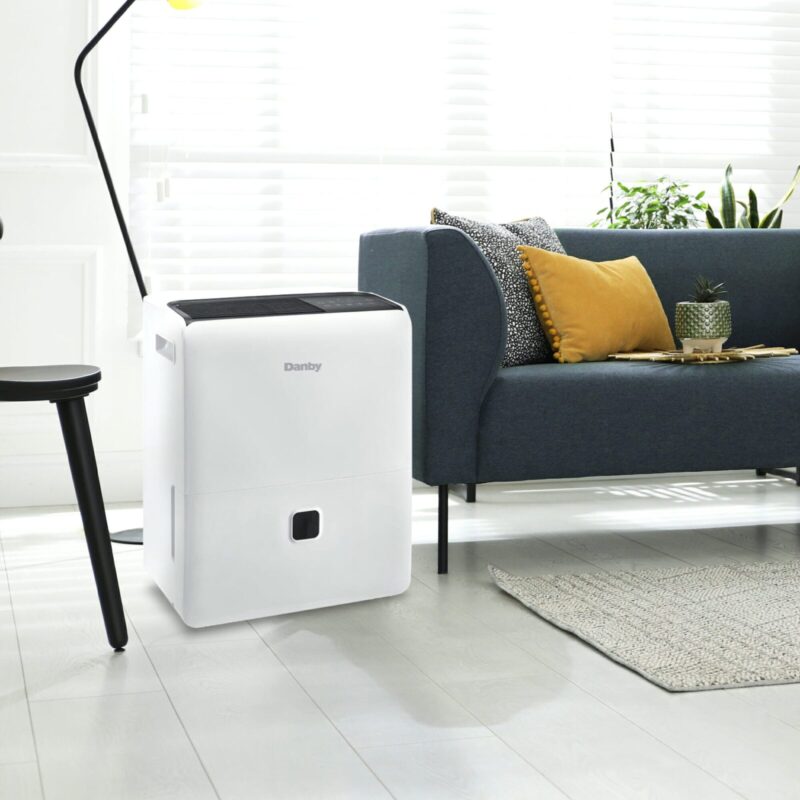
Ah yes, the household dehumidifier. Every property should have one (or more if you need them). Let’s take a closer look at how these handy machines work.
Essentially, a dehumidifier draws moisture out of the air. First, the humid air is drawn into the machine through a fan. That air is then blown over cold coils (just like your refrigerator). Warm air holds more moisture than cold air. As the temperature of the air is lowered inside the dehumidifier, the moisture in the air is redistributed as water droplets (this is called condensation).
These water droplets fall into the dehumidifier’s reservoir or down a drain hose if you hook it up to one. Finally, the now dry air is blown over warm coils to heat back up before being pushed back out into your room.
Air Movers / Fans
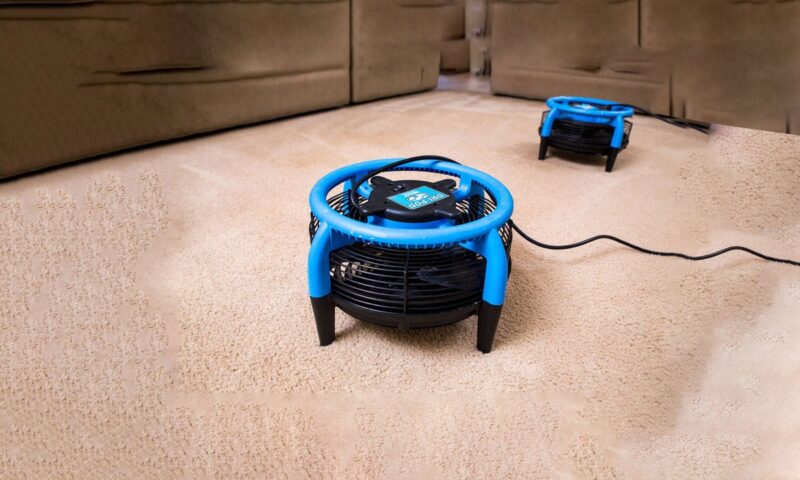
There will be instances where you need to dry things out as quickly as possible. Perhaps you suffered from some water damage or even flooding. Air movers are great at quickly drying out these types of disasters.
Air movers look like giant fans. They move a lot of air and can be pointed directly at whatever needs drying the most. Many people wonder how a fan dries anything if it isn’t actually pulling the moisture out of the air.
The answer is by replacing stale air with moving air.
If air isn’t moving, it takes a long time for water to fully evaporate. Air movers forcefully push air around wicking away moisture much quicker than without.
Restorers will even pair these with dehumidifiers. While the air mover is evaporating the moisture into the air, the dehumidifier is removing it from the air. Pretty slick if you ask me.
Commercial Desiccant Dryers
These commercial desiccant dryers are basically the same idea as residential desiccant dehumidifiers. But on a much larger scale. Commercial desiccant dryers use absorbent materials like silica gel to remove moisture from the air.
Humid air is pumped through a chamber filled with these desiccant materials. Water molecules are attracted to and trapped inside these desiccant beads. As a result, you are left with extremely dry air on the other side. These dryers are ideal for warehouses or other industrial areas that need very low humidity levels.
How Do Humidity Extractors Actually Work?
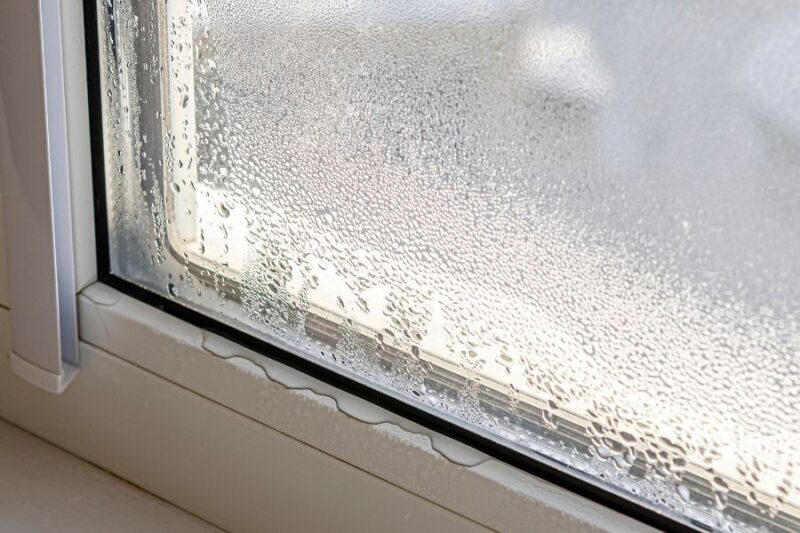
You might be wondering how the actual process of removing moisture works. You don’t need to be a scientist to understand the concepts of dehumidifiers. It really is quite simple.
Condensation
Let’s talk about condensation first. When warm air comes into contact with a cold surface condensation happens. Have you ever held a cold beverage on a warm day and seen water on the outside of your bottle? That’s condensation.
Drying equipment uses this same concept. Take a look at how a refrigerated dehumidifier works using this diagram:
When air enters the dehumidifier it is cooled down past its dew point. The dew point is the temperature where water changes states from a vapor(gas) to a liquid.
Adsorption
Now let’s discuss how desiccant dehumidifiers work. These guys use adsorption to extract water from the air. Water molecules are attracted to and held inside these desiccant beads. Similar to a sponge soaking up water.
Over time these beads become full and need to go through a regeneration process. During regeneration, the desiccant beads are heated using steam or hot gas. This frees up the water molecules once again and begins the process over.
Practical Uses for Moisture Extraction
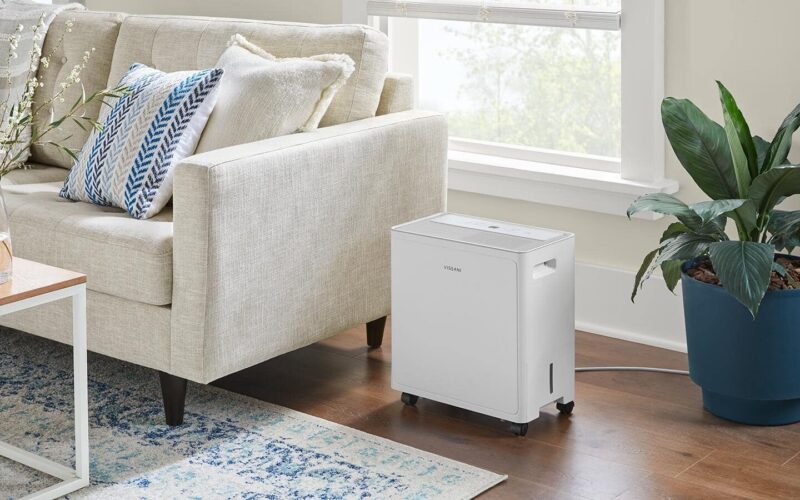
Great, now that you understand the theory of how drying equipment works. Let’s talk about how you can use them to keep your property in tip-top shape.
Selecting the Correct Unit
Decide what size unit your room / area you wish to dry is. Don’t run a small dehumidifier in your basement thinking it will do the job. Check the coverage area of the dehumidifier you are looking to purchase.
Placing your Equipment
Don’t push your dehumidifier up against a wall. Air needs to be able to flow all around the unit. The same goes for air movers. Always angle them toward the wettest area.
Don’t Guess, Measure
Finally, use a hygrometer to measure your moisture levels. Some dehumidifiers come with built-in sensors but why limit yourself? Having your own hygrometer allows you to move around and find the wettest areas of your property.
Empty That Reservoir
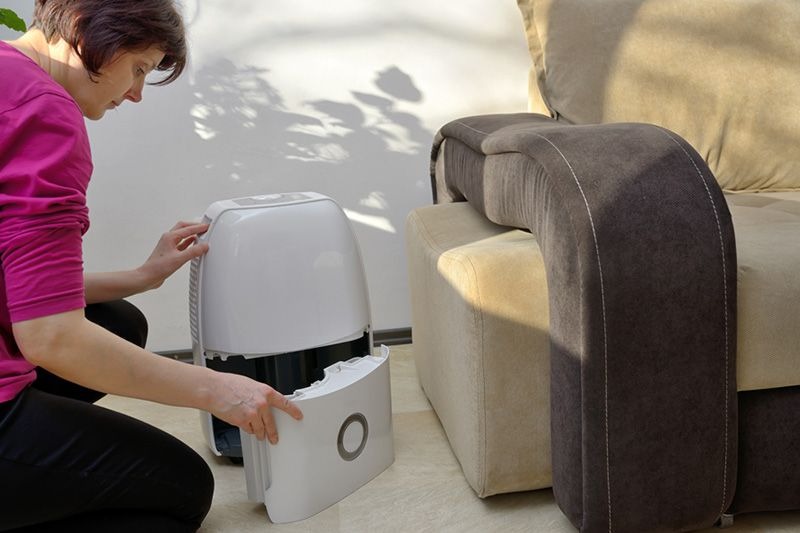
All dehumidifiers come with either a water reservoir or drain hole. Make sure to empty that reservoir or plug in a hose to continuously drain the water outside.
Keep it Energy Efficient
Lastly, you want to ensure you are running your equipment as efficiently as possible. Not only will this save you money, but it will dry your areas faster.
Look for units that are ENERGY STAR qualified. These dehumidifiers use less energy and are generally better at what they do. Run your dehumidifier on auto if you have that option. You don’t want it running harder than it needs to.
Keep doors and windows shut while your equipment is running. There is no sense in fighting outdoor humidity.
Real-world example: High-volume moisture control
Case study: Humidity control at the British Museum (UK)
For a real-world, large-scale example of high-capacity moisture control, take a look at this Condair project at the British Museum:
The British Museum required accurate, dependable humidity control over vast areas of indoor space. Humidity fluctuations were damaging valuable wooden, paper, textile and metal artefacts through material stress, deformation, and long-term exposure risks.
This need is very similar to the struggles many homeowners have with damp basements. The difference is that thousands, not dozens of square metres require protection.
Instead of installing inefficient models which would have to run 24/7/365, the museum used commercial grade dehumidifiers which were able to:
- Extract high volumes of moisture quickly
- Create stable relative humidity
- Cycle on for shorter periods rather than running constantly
- Save energy and money in the long run
Since installing the high-capacity systems, the museum has enjoyed:
- Consistent humidity control over several thousand square metres
- Reduced stress on sensitive materials and artefacts
- Less mechanical strain than using dozens of small, underpowered models
Case study link – https://www.condair.co.uk/case-studies/british-museum-humidity-control
Why it matters: what homeowners need to know
Your basement may not be the Louvre, but controlling humidity works the same way:
A single dehumidifier that’s properly sized for your space will bring humidity levels down faster.
Shorter run times mean the dehumidifier will wear out less quickly.
Consistent extraction keeps moisture out, preventing mould, odours, and damage
Most importantly: proper humidity control often leads to better energy usage.
In other words, the reason you see huge museums and facilities installing high-capacity systems is the same reason they can make sense for big houses, finished basements, crawl spaces, and wide-open rooms.
High Capacity FAQs
What qualifies as a “high capacity” dehumidifier?
Dehumidifiers that can remove 50–70 pints (24–33 litres) of moisture per day are considered high capacity. Some commercial units and restoration dehumidifiers remove over 90 pints per day.
Do high capacity dehumidifiers cost more to run?
Generally, no. Since high capacity models remove more moisture at a time, your dehumidifier will spend less time running each day. Energy usage is typically higher when they’re on, but that’s balanced out by not having ten smaller dehumidifiers running constantly.
Is one large dehumidifier better than two or more smaller ones?
For the most part, yes. A single unit that’s properly sized for your space will:
- Use less energy overall
- Require less maintenance
- Create more even humidity control
Cost you less money over the years than having to replace worn-out small dehumidifiers
Where would I need a high capacity dehumidifier?
High capacity dehumidifiers are ideal for:
- Big basements
- Entire floors, or very open layouts
- Damp crawl spaces
- Humid climates
- Old houses with chronic moisture, condensation or mould problems
Will a high capacity dehumidifier prevent mold?
Yes. By keeping indoor humidity levels between 30% and 50%, you’re creating an environment where mould spores, dust mites, and bacteria can’t thrive.
Do I need to get one with a built-in pump?
We recommend it. A built-in pump allows for continuous drainage so you:
- Don’t need to empty water collection tanks
- Don’t risk overflow
- Don’t have to worry about the dehumidifier being used for longer periods of time
How long will a high capacity dehumidifier last?
Provided it’s sized correctly for your area and not expected to run 24/7, a good quality high capacity dehumidifier can often outlive smaller models because it won’t be overworked.
Final Words
Drying equipment can be the difference between damp and dry. Many homes and businesses rely on these units to keep humidity at bay. Now that you know how they work and can operate them correctly.
Remember, don’t run your equipment if it’s not needed. That will just waste energy and money. Use the tips mentioned above and take care of your equipment. A little maintenance here and there will extend the life of your dehumidifier.