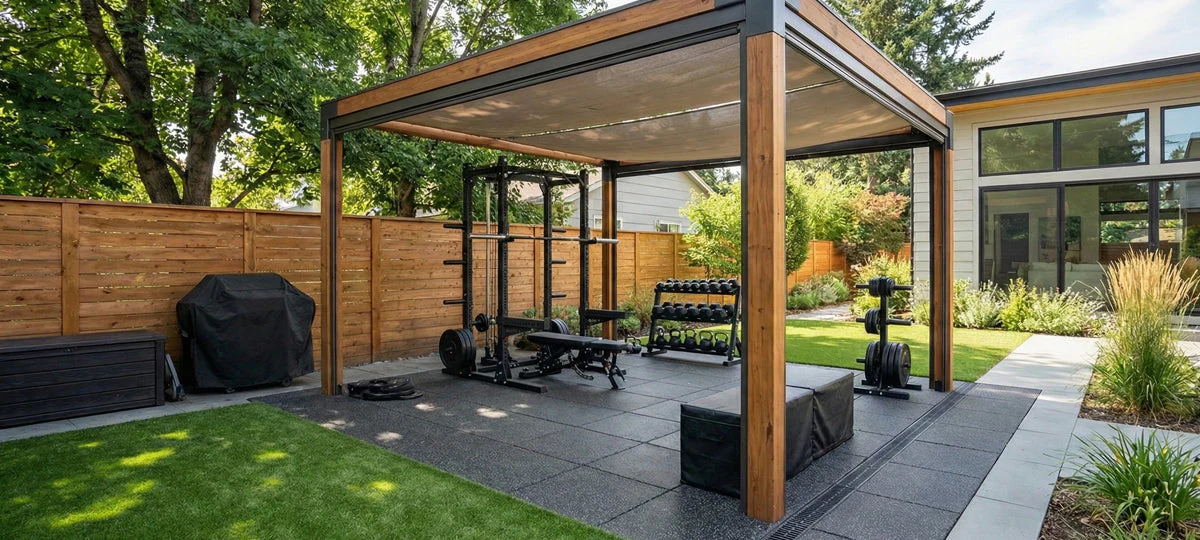
A growing number of homeowners are turning unused yard space into practical workout areas. Surveys of home fitness users consistently show that convenience is the main reason people stick with training routines. Walking outside and starting a session within minutes often removes the biggest barrier to consistency. A backyard home gym can offer flexibility and privacy, but outdoor training requires more planning than many people expect.
Backyard home gym ideas work best when layout and weather protection are treated as essential parts of the project rather than afterthoughts. Ground preparation, equipment placement, and storage decisions will determine whether the space stays usable throughout the year or becomes frustrating after a few months.
The following guide explains realistic ways to plan an outdoor workout station that functions reliably in everyday conditions.
Planning the outdoor workout area
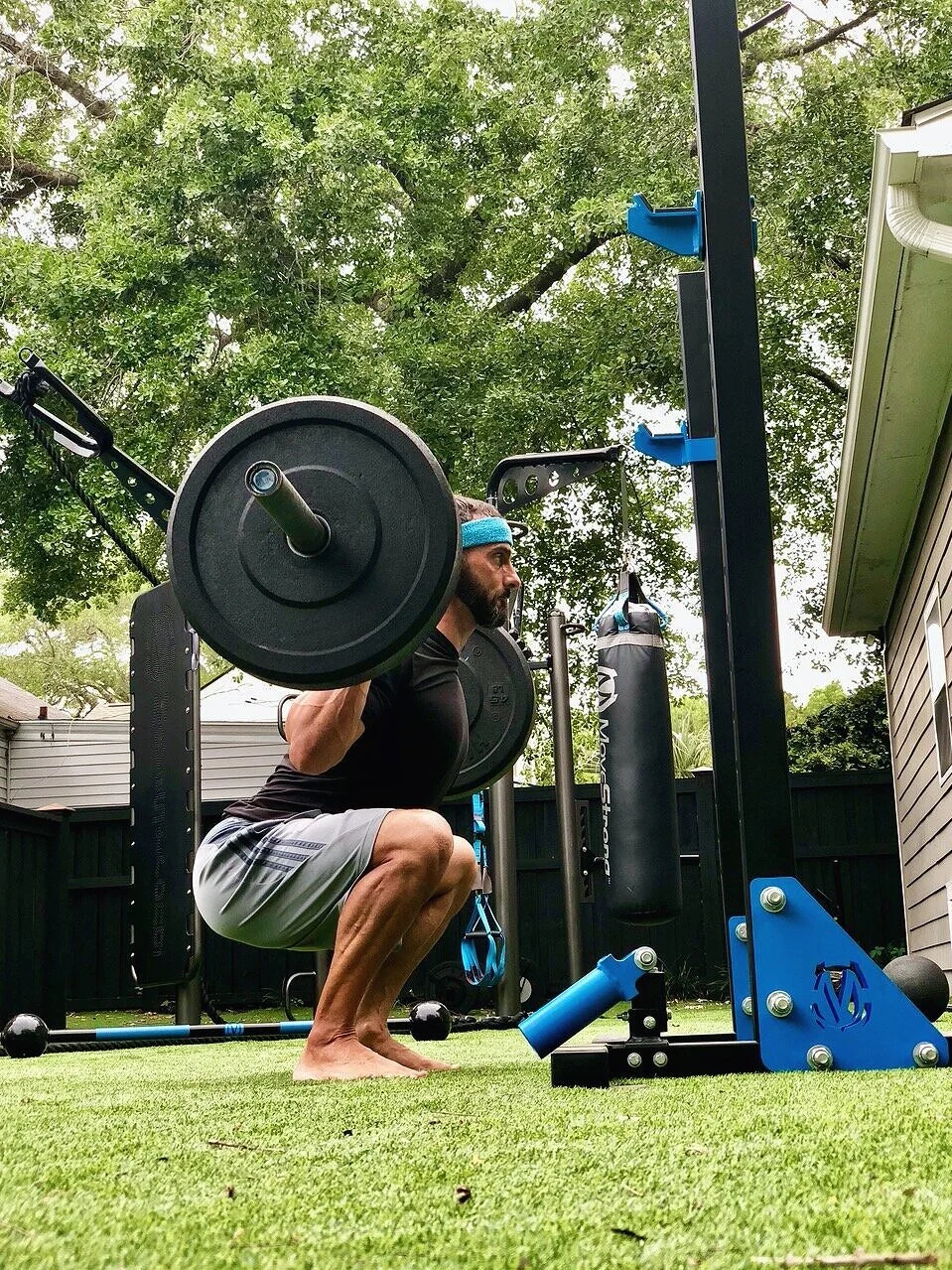
Choosing the right location determines how comfortable and practical the gym will be. Many people underestimate how small details such as slope or drainage affect everyday use.
Flat ground simplifies installation and makes lifting exercises safer. Slightly elevated areas usually drain better after rain, which prevents puddles from forming under equipment. Training near the house is convenient, but too close to windows can create noise issues when weights are dropped.
When evaluating a location, the following points make a noticeable difference:
- Available space determines whether exercises can be performed safely without moving equipment every session.
- Solid and level ground helps prevent benches and racks from shifting during use.
- Natural shade reduces heat buildup during summer training.
- Distance from neighbors helps avoid complaints about early morning or late evening sessions.
- Privacy makes outdoor workouts more comfortable and less distracting.
Most basic backyard setups work well in an area of about 3 x 4 meters. That size allows space for a rack, bench, and movement around equipment without feeling cramped.
Designing a practical training layout

Once the location is chosen, the next step is arranging stations so workouts flow naturally. Outdoor workout station layout decisions should make transitions between exercises simple without constant rearranging.
Many backyard gyms benefit from simple planning tools. Some owners who train clients or family members use Booking Software to schedule sessions and prevent overcrowding in smaller workout areas. Even a personal setup can become easier to manage when training times are organized.
A simple layout often works better than complex arrangements. Dividing the area into small functional zones keeps equipment accessible and reduces clutter.
Typical zones include:
- A strength corner where racks and heavier equipment stay permanently installed.
- A bodyweight area with enough clearance for pull ups, dips, and suspension trainers.
- A cardio space where skipping rope or short conditioning sessions can be done safely.
- A stretching section where mats can remain clean and dry.
- A storage section that keeps loose equipment off the ground.
Clear walkways between zones prevent tripping hazards and make the space easier to maintain.
Surfaces and ground protection
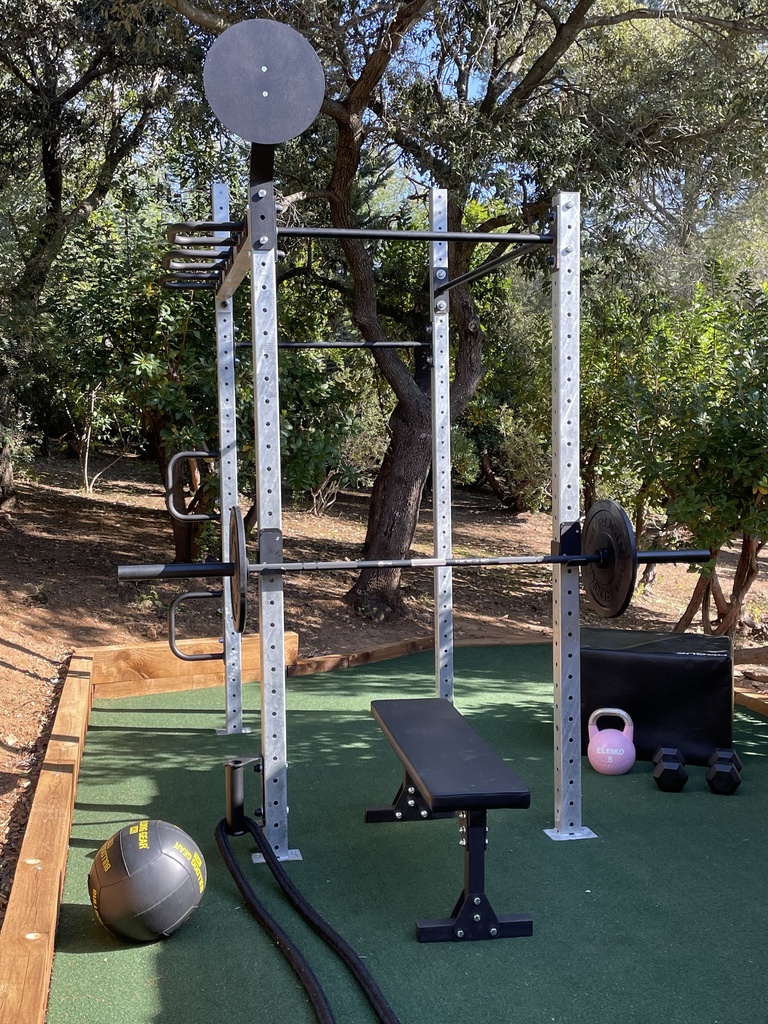
The surface under your equipment has a major effect on safety and durability. Outdoor workout station layout plans often fail because the ground is treated as an afterthought.
Different surfaces work well depending on budget and long-term plans.
- Rubber gym flooring absorbs impact and protects both equipment and joints during lifting.
- Concrete slabs create the most stable base but require proper drainage planning.
- Wooden platforms provide a balanced option and can be built without heavy construction.
- Compacted gravel drains well and works for lighter equipment setups.
- Outdoor mats offer a temporary solution but may shift or degrade over time.
|
Surface Type |
Stability |
Drainage |
Installation Difficulty |
| Rubber Flooring | High | Medium | Moderate |
| Concrete | Very High | Low without slope | High |
| Wood Platform | High | Medium | Moderate |
| Gravel | Medium | High | Low |
| Mats | Low | Medium | Very Low |
Concrete and wood platforms usually provide the most reliable base for long term backyard training.
Soft soil tends to shift over time and causes racks and benches to become uneven.
Storage and organization strategies

Outdoor workout station layout plans benefit from organized storage more than many people expect. Loose equipment left on the ground becomes dirty quickly and makes training less efficient.
Dedicated storage helps maintain order and extends equipment lifespan.
Effective storage often includes:
- Wall mounted hooks for bands and accessories.
- Waterproof boxes for smaller items.
- Vertical racks for dumbbells and kettlebells.
- Covered shelves for chalk, straps, and gloves.
Keeping equipment off the ground also improves cleaning and prevents insects from nesting around frequently used items.
Simple organization saves time during workouts and reduces long term wear.
Conclusion
A backyard home gym can work reliably when layout and weather protection are planned from the beginning. Stable surfaces, logical equipment placement, and basic shelter make outdoor training practical throughout the year.
Outdoor setups do not need to be elaborate to be effective. Careful planning usually matters more than expensive equipment. A well organized space makes training easier to maintain and keeps the area usable in changing conditions.