We bet that when you think about interior design, you’re thinking about nicely ordered furniture, decor, and art. Symmetry, matching sets, and colour palettes that whispered rather than shout have been the gold standard for years. Well, no longer for a fascinating shift is underway.
Modern interiors are embracing chaos. Not the messy, accidental kind, of course, but a carefully curated disorder that feels spontaneous, dynamic, and more personal.
Chaos, it seems, has found its place in the home, and the results are actually quite nice!
The Philosophy of Chaos is Intentional Disorder
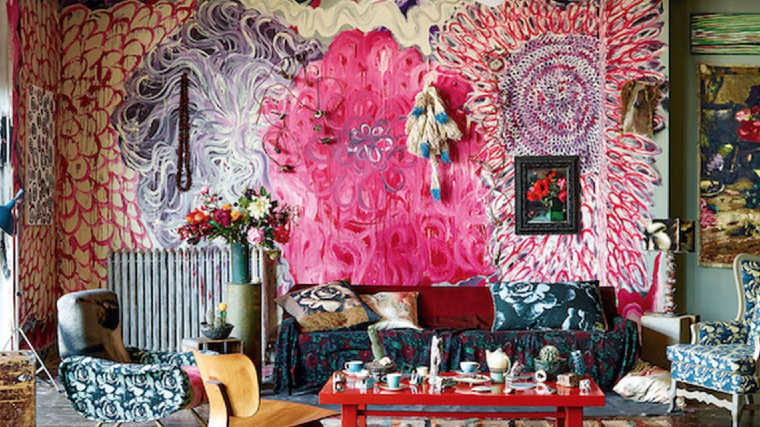
At first glance, “chaos” might sound intimidating or tiring even. How can disorder possibly feel elegant, sophisticated? The answer lies in intention. In design, chaos is not about throwing things together randomly and hope for the best, but rather about orchestrating unpredictability in a way that excites the senses. A living room filled with eclectic furniture, layered textures, and vibrant art can stimulate creativity, spark conversation, and make a space feel alive.
Chaos in interiors challenges our brains to explore rather than passively absorb what’s around us. It disrupts visual monotony and encourages curiosity. And yet, there is balance in the mids of all. Without it, chaos becomes clutter. So, modern designers know how to carefully calibrate this tension, allowing interiors to feel spontaneous without overwhelming the senses.
Breaking the Rules with Colour & Pattern
These two culprits are perhaps the boldest instruments of controlled chaos. Modern design loves unexpected pairings like deep emeralds alongside soft blushes, mustard yellow offset with slate grey, or even neon pops against a neutral base. Contrast without conflict. That’s key.
Patterns, too, play a starring role. Mix stripes, geometrics, florals, and abstract prints and you’ll have a lively, layered effect. The trick is to nail the rhythm: repeating elements in varying sizes, tones, or textures to help the eye navigate what might otherwise feel like visual madnesss.
A contemporary living room may well feature mismatched cushions, a patterned rug, and a boldly painted wall but when combined with careful placement, it feels curated rather than cacophonous.
Control Disorder Through Layout and Furniture
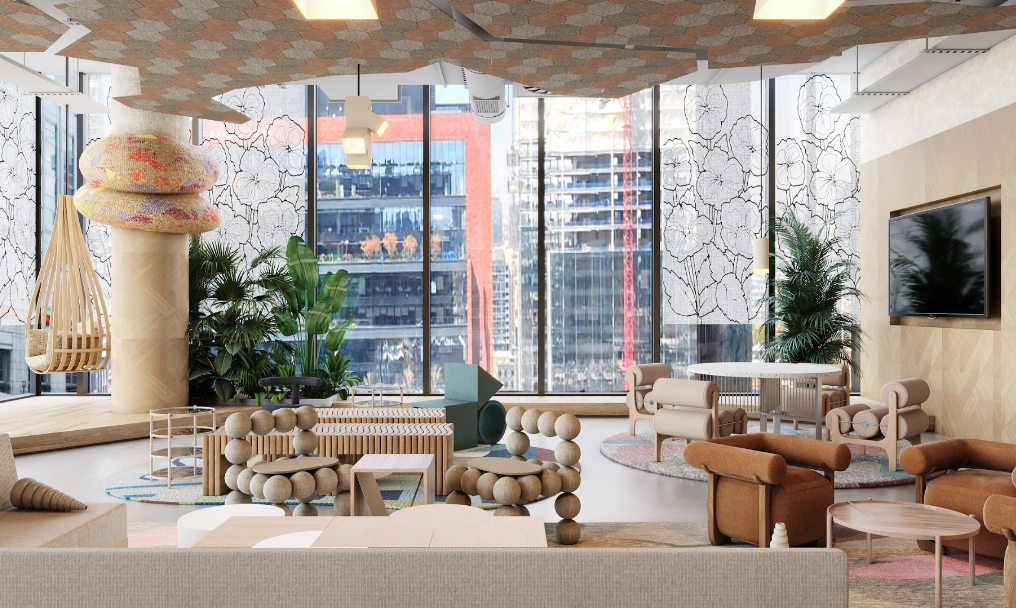
Furniture in chaotic-modern interiors breaks from traditional symmetry. An antique armchair might sit alongside a sleek, modern sofa; a rustic coffee table could contrast with a minimalist sideboard. Shapes, heights, and materials are mixed to create a sense of spontaneity.
Layout, too, plays a subtle role in chaos. Non-linear arrangements encourage movement and exploration, guiding the eye across the room. A corner that invites curiosity, a reading nook tucked under a tall, slightly askew bookshelf. Such arrangement will feel purposeful rather than random. In this way, you tame disorder and help it become an art form.
Art at the Heart of Chaos
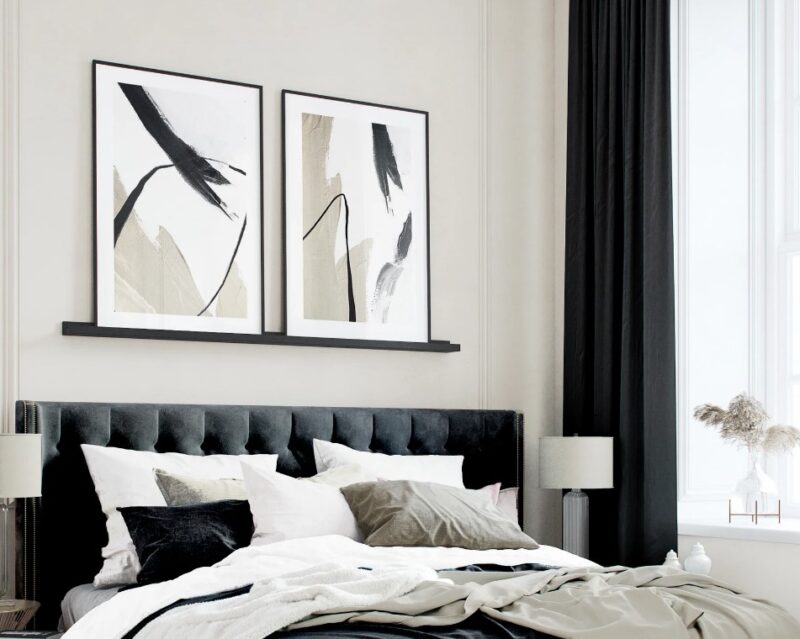
Nothing embodies controlled chaos quite like an abstract canvas. Bold brushstrokes, vibrant splashes of colour, and unexpected composition can transform even the calmest room into a focal point of energy. An abstract painting above a neutral sofa, for example, can anchor a living space while simultaneously adding tension, movement, and unpredictability.
Art in chaotic interiors plays the role of a guide that establishes dialogue with the room’s colours, furniture, and textures, and creates a cohesive energy that feels deliberate, intentional. The beauty of an abstract canvas lies in its refusal to conform. It invites you and visitors to interpret, to reflect, just like a tamed chaotic interior would.
Objects & Curiosities
This “controlled chaos” also thrives on layers, and objects are the perfect instrument to keep things interesting. Books, trinkets, vases, and collectibles provide visual intrigue and personality. A carefully styled shelf or tabletop, stacked with mismatched volumes and quirky souvenirs, becomes a microcosm of the room’s broader aesthetic.
But you have to know how to curate well to achieve the effect. Each object should contribute to the narrative without overpowering the space. In this way, curated clutter becomes an expression of identity and a way to live amid visual energy without losing a sense of calm.
Shadows and Surprise
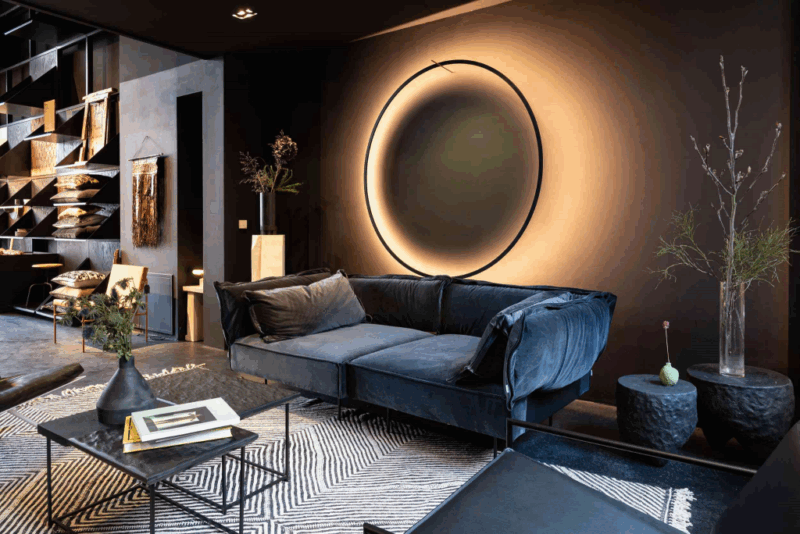
Lighting can also add something special to chaotic interiors. Multiple sources like pendants, floor lamps, wall sconces, and even candles can all create layers of illumination that enhance texture and depth. Shadows and reflections add dimension, emphasising the room’s intentional unpredictability.
The interplay of light and colour, texture and form, keeps the eye moving and the mind engaged. It’s this dynamic energy that distinguishes intentional chaos from mere mess. A well-lit, layered interior feels alive, inviting inhabitants to linger and explore.
Some Quick Tips for Incorporating Chaos
For those eager to embrace controlled chaos without feeling overwhelmed, here are some playful, elegant approaches:
- Start with Art: One bold abstract canvas can anchor a space and guide your colour palette.
- Mix Textures and Finishes: Layer velvet, linen, stone, and wood to create tactile intrigue.
- Embrace Asymmetry: Unexpected pairings of furniture and décor feel deliberate and lively.
- Layer Objects Gradually: Add personality through curated trinkets, books, and curiosities.
- Balance Chaos with Calm: Maintain a few neutral elements to prevent visual overload.
Even with such small touches, you can inject a sense of joyful unpredictability into a room.
The Elegance of Disorder
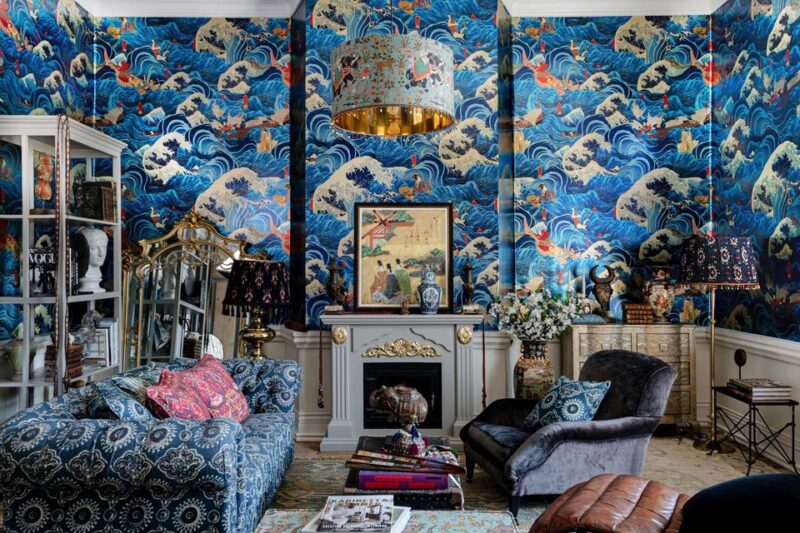
Chaos is not an accident. In interior design, it is sophisticated strategy. When curated thoughtfully, disorder transforms interiors, making them dynamic and expressive, encouraging exploration, creativity, and engagement.
Modern interiors prove that perfection isn’t the only path to elegance. Sometimes, it’s the unexpected, the mismatched, and the beautifully unpredictable that breathe life into a space. Embrace chaos. Discover a design philosophy that is as playful, energetic and yet, thoughtful.
After all, a home that tells a story and keeps you intrigued is far more interesting than one that simply looks perfect.