
A wine glass rarely breaks when you expect it to. It’s the moment you think, “This should be fine,” that you hear that quiet, heartbreaking crack inside a box.
Packing fragile items is not about being careful in a general sense. It’s about understanding pressure, movement, and what really happens inside a van when the road isn’t perfectly smooth. A stack of plates wrapped in newspaper might survive a short drive across town.
Add a few potholes and a tight corner, and suddenly your kitchen arrives in pieces. Situations like these are familiar to experienced movers, and teams such as Ed Kowalski Removals have seen first-hand how small packing shortcuts often lead to damaged belongings.
Glassware and Crockery Need Structure, Not Just Padding
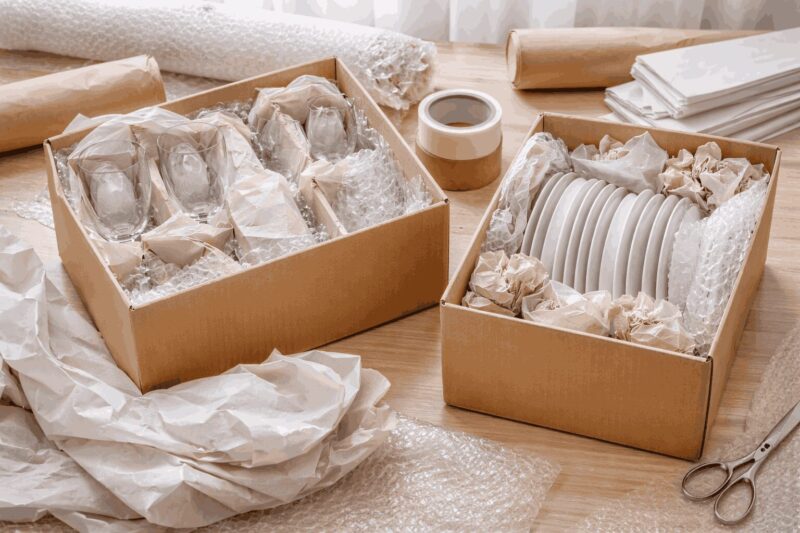
One of the biggest mistakes people make is treating fragile items as if soft wrapping alone is enough. Bubble wrap helps, but structure matters just as much. Each glass should be wrapped individually, with special attention to the stem and rim, then placed upright in a sturdy box. Crumpled packing paper should fill every gap so nothing shifts when the box is moved or tilted.
Plates and bowls travel best when packed vertically rather than stacked flat. It feels counterintuitive, yet this position spreads pressure more evenly and reduces the chance of cracks. The box itself should never feel loose or hollow. If you can shake it and hear movement, something inside is at risk.
Professional movers follow these principles as routine. Teams like Ed Kowalski Removals handle delicate kitchenware on a daily basis and understand how small adjustments in packing can make the difference between a cupboard ready to use and a box of shards.
Electronics and Screens Demand Extra Protection
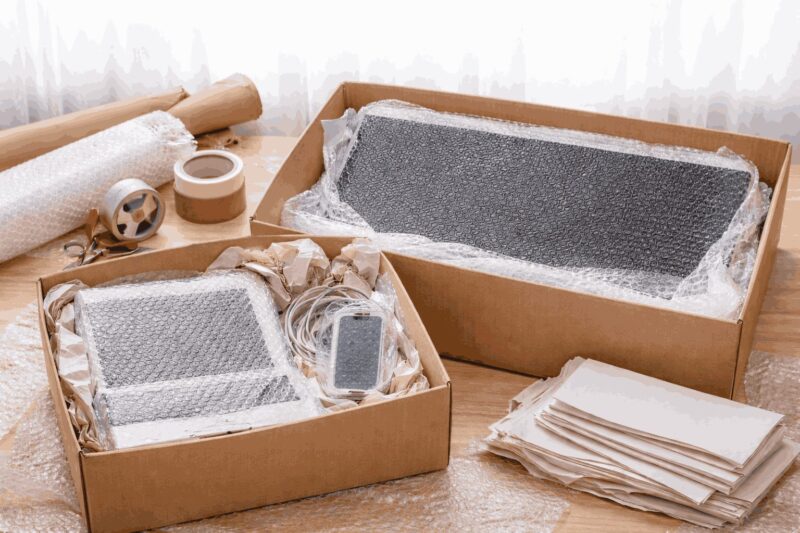
Televisions and monitors are especially vulnerable during a move. Their flat surfaces make them easy to carry but surprisingly easy to damage. The screen should always be covered with a soft layer that won’t scratch the surface, followed by protective padding that absorbs shock. If the original box is gone, a double-walled carton and corner protectors are a smart substitute.
Cables and accessories should be packed separately and clearly labelled. Wrapping them around the screen or taping them to the back might seem efficient, yet it increases pressure on fragile areas. Keeping components organised also saves frustration when it’s time to reconnect everything in the new home.
This is where experience and proper equipment really show their value. Ed Kowalski Removals use specialist materials designed for transport, along with the right handling techniques to keep high-value electronics stable in transit. Their teams are trained to assess each item rather than treat everything as just another box.
Mirrors, picture frames, and glass shelves come with their own risks. Flat glass needs rigid support as well as cushioning. Cardboard sheets cut to size and placed on both sides create a protective sandwich, while padding around the edges absorbs vibration. These items should always travel upright and be clearly marked so they are not placed under heavier loads.
Across hundreds of moves, professionals learn to spot weak points before they turn into damage. A slightly loose frame, a thin glass panel, or an uneven surface can change how something should be packed. That kind of judgement is hard to replicate without hands-on experience.
Taking extra time to pack fragile items properly may feel slow in the moment, yet it is far quicker than dealing with replacements and repairs later. Careful wrapping, tight packing, and the right materials turn a stressful part of moving into a controlled process. When you understand how easily small movements inside a box become big problems on the road, the logic behind professional packing suddenly makes perfect sense.