Owning a pool doesn’t mean constant work, but it does require understanding the basics.
When homeowners know what actually keeps a pool clean, balanced, and stable, maintenance becomes predictable instead of stressful.
From daily habits to the role of tools like a robotic pool cleaner, proper maintenance is about preventing small issues before they turn into expensive problems.
What Basic Swimming Pool Maintenance Means for Homeowners
Basic swimming pool maintenance is about keeping your water clean, balanced, and moving. That means regular cleaning, monitoring water chemistry, and making sure the pump and filter are doing their job. For homeowners learning basic pool maintenance, consistency matters more than complexity.
For homeowners, this isn’t just about looks. Proper basic pool care prevents algae, bacteria, and cloudy water, keeps the pool safe for swimmers, protects expensive equipment from early failure, and saves money by avoiding chemical overuse and major repairs. Residential pool maintenance is ultimately about protecting long-term value, not reacting to emergencies.
A well-maintained pool is predictable. A neglected pool is reactive; you’re constantly fixing problems instead of enjoying it. Basic swimming pool maintenance isn’t about making water look blue; it’s about controlling what you can’t see before it becomes expensive.
Every pool problem starts small: microscopic algae growth, chemical drift from heat or rain, or reduced circulation from minor debris buildup. When basic pool maintenance is skipped, these “small” issues compound. That’s why pools don’t fail gradually; they fail suddenly. One missed week can turn into green water, damaged surfaces, or a burned-out pump.
For homeowners, residential pool maintenance is ultimately about risk management. You’re protecting the pool’s finish, plumbing, and equipment, not just today’s swim.
How Often Basic Pool Maintenance Is Needed
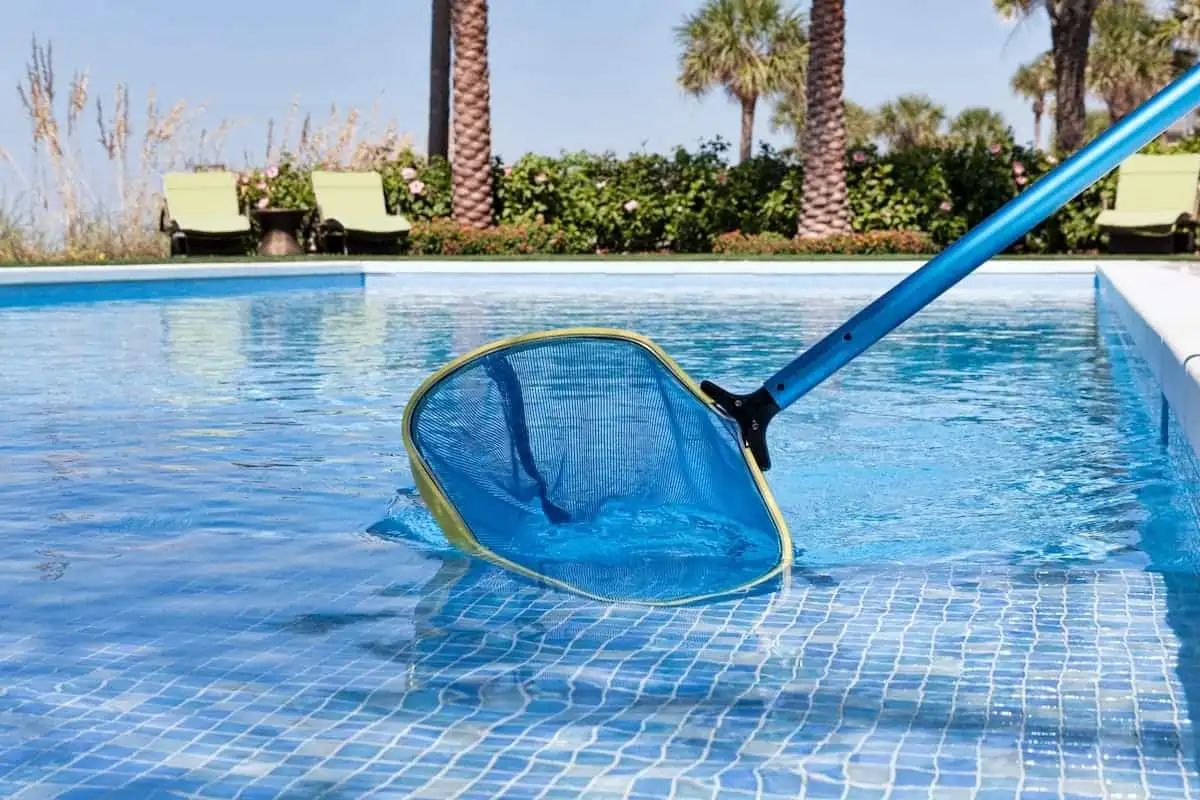
Most residential pools need light maintenance several times per week and a more thorough check once a week. As a baseline, basic pool care includes skimming and quick visual checks a few times per week, along with weekly water testing, chemical adjustments, filter inspection, debris removal, and brushing walls and steps.
During heavy use, hot weather, or after storms, basic swimming pool maintenance needs to happen more often. Pools don’t follow calendars; they respond to conditions. Temperature spikes, heavy rainfall, increased swimmer load, wind, and debris all affect water balance and circulation.
A pool that’s checked weekly but ignored after storms or heat waves is more likely to fail than one that’s lightly monitored throughout the week. Consistent observation beats rigid scheduling every time. The homeowners who struggle most with basic pool maintenance aren’t lazy; they’re relying on calendars instead of cues.
Basic Pool Care and Water Chemistry Basics
Water chemistry is the foundation of everything else. If these levels are off, no amount of cleaning will fix the pool. For effective basic pool care, homeowners should watch chlorine, pH, total alkalinity, calcium hardness, and cyanuric acid, since each one affects sanitation, comfort, surface protection, and how well the system holds balance over time.
Balanced water prevents eye irritation, protects pool surfaces and equipment, and keeps chlorine working instead of fighting chemistry battles. Many pool maintenance tips focus on chlorine alone, but chemistry determines whether chlorine works at all. When pH, alkalinity, or stabilizer are off, chlorine burns off faster, algae survives “normal” chlorine levels, and swimmers feel irritation even when numbers look “fine.”
Balanced chemistry isn’t about hitting perfect numbers. It’s about keeping the water predictable, so one adjustment doesn’t create three new problems. That’s the difference between managing a pool with basic swimming pool maintenance and constantly chasing it.
Essential Pool Maintenance Tips for Homeowners
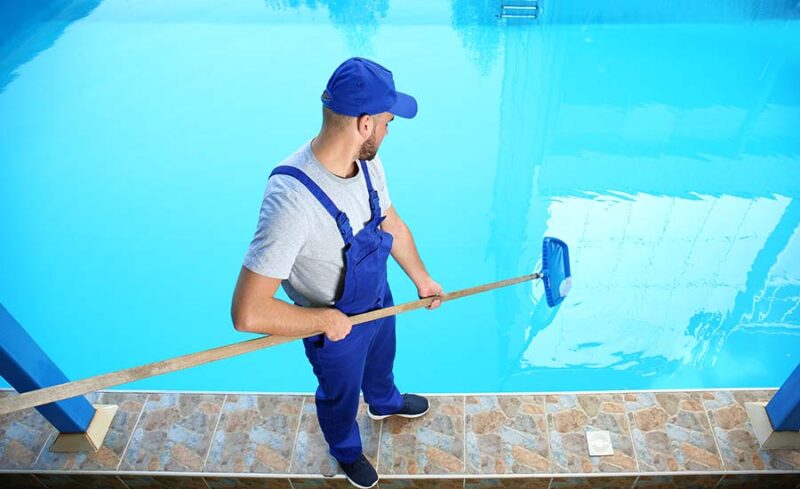
The most important pool maintenance tips are the ones that stop problems before they start. Skimming leaves and debris before they sink, brushing walls, steps, and corners, vacuuming or running a robotic cleaner, and emptying skimmer and pump baskets all work together to prevent buildup that leads to bigger issues.
The most important cleaning tasks are the ones that prevent surfaces from becoming biological real estate. Algae doesn’t start on the floor, it starts on shaded walls, in corners with low circulation, and along steps and waterlines. That’s why brushing is a critical part of basic pool care. Skimming keeps the pool tidy. Brushing keeps it stable.
Brush even if the pool “looks clean,” because algae starts invisibly. Clean after storms, not just on schedule, and don’t ignore waterline buildup; it only gets harder to remove over time. Consistency beats intensity; simple pool maintenance tips applied regularly prevent major problems. Homeowners who skip brushing usually don’t notice a problem until they suddenly can’t get rid of one.
Pool Maintenance for Beginners and How Equipment Works
For pool maintenance for beginners, understanding how the equipment works is essential. Think of the pump and filter as the pool’s circulatory system. The pump pulls water from the pool, while the filter traps dirt, oils, and debris before sending clean water back. Circulation distributes chemicals evenly, and filtration removes particles you can’t see. When circulation is poor, algae, cloudy water, and chemical waste follow.
The pump doesn’t clean the pool. It makes cleaning possible. If water isn’t moving properly, sanitizer never reaches trouble spots, debris stays suspended instead of being filtered, and chemistry tests stop matching real conditions. That’s why many issues blamed on “chemicals” during pool maintenance for beginners are actually circulation problems.
For beginners, the goal of basic pool maintenance is to run the pump long enough to circulate all pool water daily, usually eight to twelve hours, keep baskets clean so water flows freely, and understand the basic cleaning needs of the filter type you have. A clean filter makes every other maintenance task easier. When circulation drops, every other maintenance task becomes less effective, even if you’re doing everything “right.”
Residential Pool Maintenance Mistakes to Avoid
Some of the biggest residential pool maintenance problems come from good intentions done wrong. The biggest mistake homeowners make is fixing symptoms instead of causes, adding chemicals without testing first, overcorrecting water chemistry instead of making small adjustments, or adding more chlorine instead of improving circulation.
Treating algae without brushing first, correcting pH daily instead of stabilizing alkalinity, and ignoring early signs of algae, cloudiness, or declining filter performance all undermine basic swimming pool maintenance and lead to the same outcome.
Pools reward patience and consistency. Quick fixes usually create new problems. Pools punish overreaction just as much as neglect. Running the pump too little to “save electricity” or forgetting about filter maintenance until water quality drops only makes residential pool maintenance more difficult.
The goal isn’t aggressive correction, it’s controlled adjustment.
Residential Pool Maintenance and Seasonal Changes
Seasonal changes affect temperature, debris, and water chemistry. Adjusting residential pool maintenance seasonally prevents surprise issues when the pool is reopened or heavily used again. Seasonal maintenance isn’t about different tasks, it’s about different stress points.
Spring focuses on rebalancing water after winter, deep cleaning, and equipment checks. Summer brings more frequent testing due to heat and heavy use, along with increased chlorine demand that stresses sanitation and circulation. Fall shifts attention to extra skimming from leaves and preparing water chemistry for cooler temperatures. Winter, or closing season, reduces circulation needs while protecting plumbing and equipment from freezing.
Homeowners who use the same routine year-round often do more work while getting worse results. Seasonal awareness is one of the most overlooked pool maintenance tips, and one of the most effective.
When Basic Pool Care Isn’t Enough
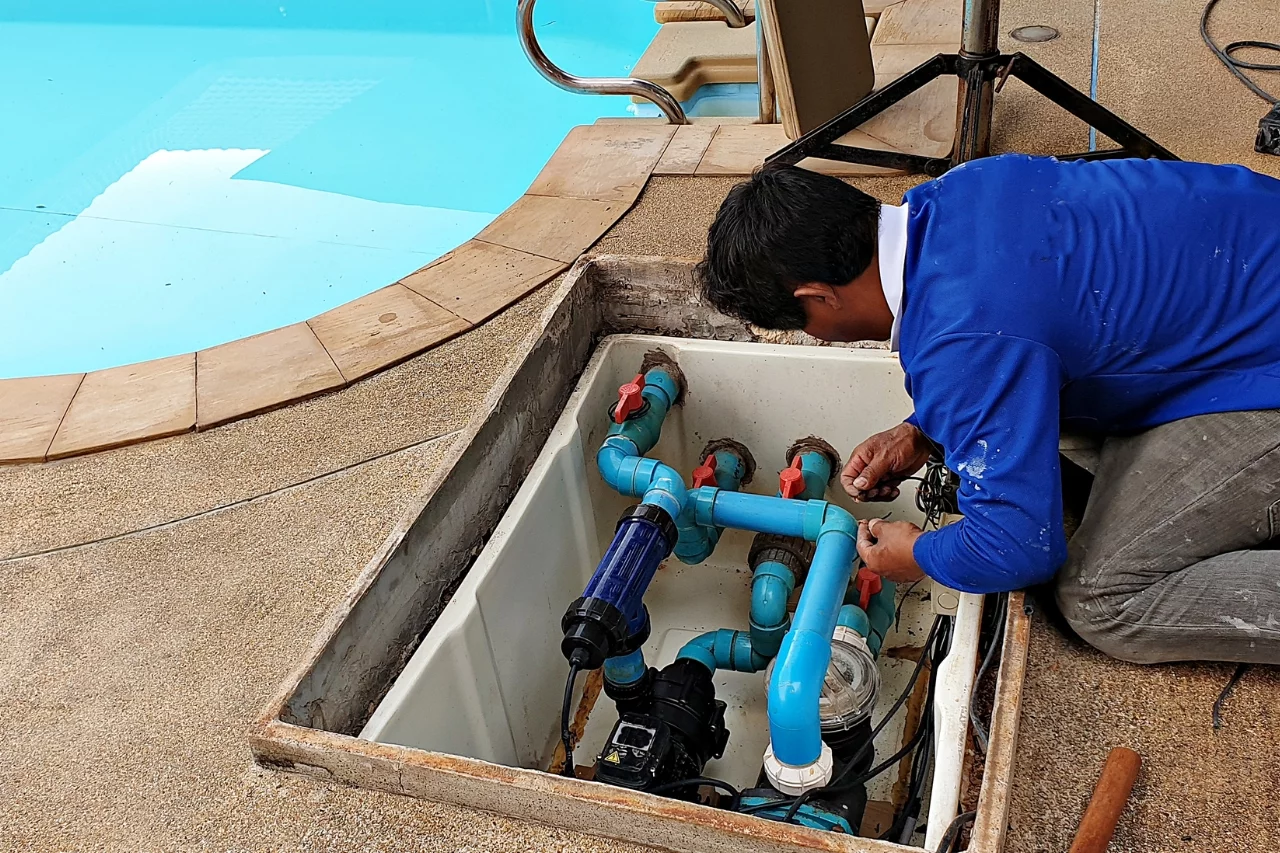
Basic pool care reaches its limit when problems stop responding to routine fixes. Basic swimming pool maintenance stops working when the pool becomes chemically or mechanically unstable. Algae that returns within days despite balanced chemistry, water that stays cloudy after multiple treatments, pressure readings that change unpredictably, or chemical demand that keeps increasing are all warning signs.
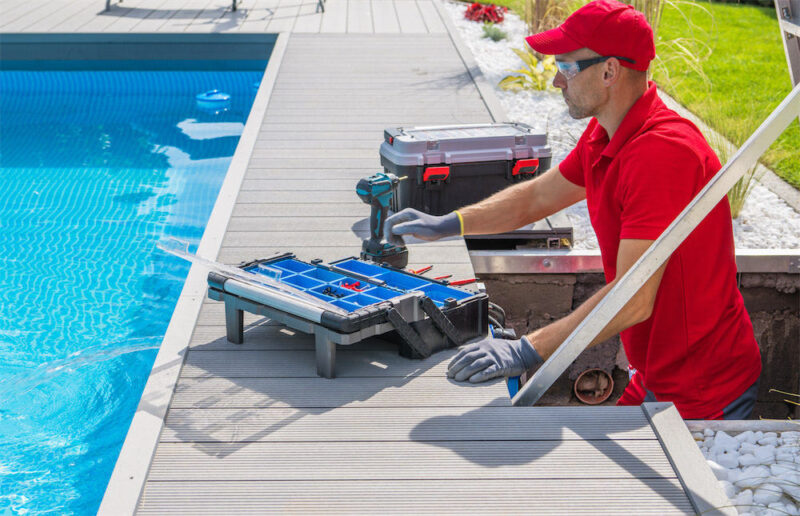
Equipment issues like poor priming, ineffective filtration, unusual noise, leaks, pressure problems, or electrical concerns signal that continuing DIY residential pool maintenance often makes recovery harder. When you’re spending more time fixing the pool than using it, routine care has crossed into damage control.
Professional service isn’t a failure, it’s often the fastest way to protect your investment and reset the pool correctly. Professional help isn’t about convenience; it’s about restoring stability when basic pool maintenance is no longer enough.