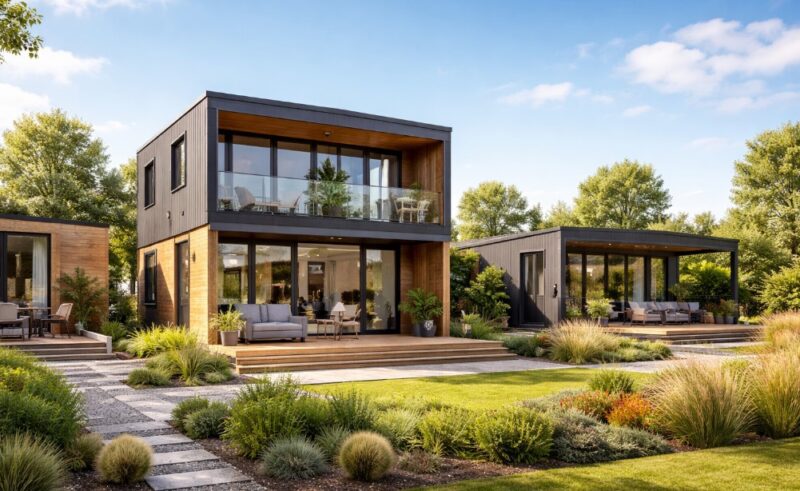
If you’ve ever thought “I just want a finished space without a year of noise, delays, and budget creep,” you’re not alone. That’s a big reason modular homes for sale are getting so much attention in the UK right now. They’re modular, built mostly off-site, and can arrive on your plot far closer to “ready to use” than a traditional build.
They also fit the way a lot of people live today: flexible work, multi-generational families, side income from short lets, and a general preference for smart, efficient spaces over endless square footage.
Why Modular Homes for Sale Are Gaining Popularity
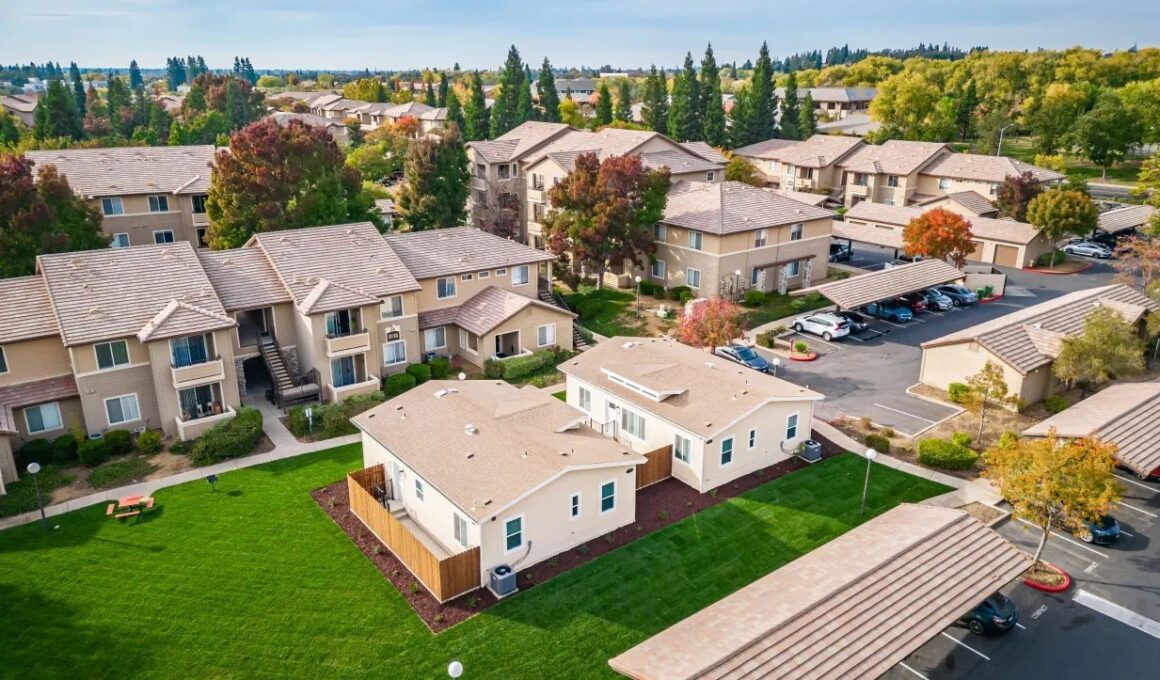
The UK housing situation has nudged people to get creative. Between limited supply, high prices, and planning constraints that can make full new builds feel like a marathon, buyers are increasingly open to prefabricated options that give more certainty on timeline and outcome.
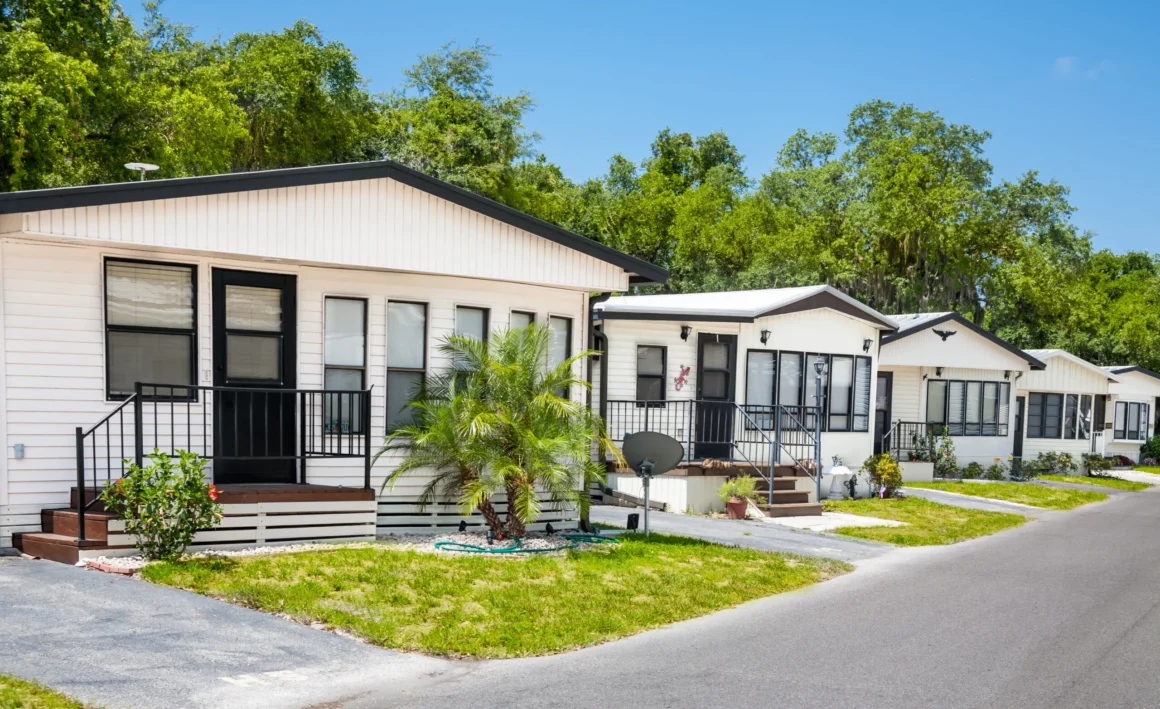
Another big shift is that modular homes for sale are starting to replace the “static caravan” idea for many people. Caravans can work, but lots of buyers want something that looks more like a modern small home, holds up better over time, and feels comfortable in winter as well as summer. A well-built container home can tick those boxes, especially when insulation, ventilation, windows, and interior fit-out are done properly.
And honestly, they’re just easier to picture in normal life: a home office you actually want to work in, an annexe that doesn’t feel temporary, or a rental unit that guests won’t describe as “quirky” in the slightly-worried way.
Types of Modular Homes Available in the UK
Most people start small, because the use case is obvious. Compact studio and 1-bed units are popular as garden rooms, annexes, starter homes (where feasible), or short-term rental units. They’re also a neat solution when you want separation: a grown-up kid, a visiting relative, a workspace, or a tenant who doesn’t need to share your hallway.
The next step up is where it gets really interesting for longer stays. Larger 2–3 bedroom models can be designed with proper separate bedrooms and an open-plan kitchen/living area, which makes the space feel like a regular home rather than a “unit.” If you’re thinking family use or longer-term rental, this layout style usually wins because it feels normal: privacy where you need it, and a shared area that isn’t cramped.
One practical point for the UK: think about how the home will be used year-round. A weekend cabin and a full-time living space are different beasts, so it’s worth choosing a model designed for the reality of British weather, not just a nice-looking summer setup.
What a Typical Modular Home for Sale Includes
When people ask “what am I actually buying?”, the simplest way to think about it is: shell plus systems plus finish. A typical modular home for sale should include a completed, structurally prepared shell, insulation suitable for year-round use, and properly cut and fitted openings (doors, windows, ventilation points) so it doesn’t feel like a DIY project.
Then you’ve got the parts that make it liveable. Many turnkey-style units include a fitted interior with a kitchen, bathroom, heating, electrics, lighting, and plumbing already installed. Done right, you’re not shopping for ten different contractors-you’re choosing a spec, and the unit arrives largely complete.
It’s still important to ask what “complete” means in real terms. For example: what heating system is included, what ventilation is used in the bathroom/kitchen, what’s the wall/floor build-up, and what’s the finish level (basic durable vs premium). Those details affect comfort, running costs, and how the space feels after the first few months.
Key Factors When Choosing Modular Homes for Sale
The biggest difference between “this is perfect” and “I wish I’d asked earlier” is usually customisation. Some modular homes for sale are fixed catalogue options, which can be fine if the layout already matches your needs. But a lot of UK plots and use cases benefit from at least some flexibility: swapping window positions for privacy, adding storage, changing the kitchen run, adjusting the bathroom layout, or choosing finishes that suit rentals versus personal use.
Delivery and site logistics matter more than most people expect. You’ll want clarity on lead times, how transport is arranged, whether a crane or hiab is needed, and what site access is required (tight lanes, low trees, soft ground, awkward gates). A great unit on paper can become a headache if delivery hasn’t been properly planned.
Finally, don’t ignore foundations and groundworks. Even if the home is “ready-made,” the plot still needs preparation, and you’ll likely need guidance on what base is suitable, how services connect (water, waste, electric), and what’s required for compliance in your area. A manufacturer that helps you think through this early can save you a lot of back-and-forth later.
Investment Scenarios Using Modular Homes in the UK
If you’re looking at modular homes for sale from an investor angle, speed and repeatability are the main advantages. A common scenario is placing several units on a single plot in a tourist hotspot to launch or scale a holiday rental business quickly. The appeal is simple: consistent build quality, predictable layouts, and the ability to expand in phases-start with one or two units, then add more once bookings prove the demand.
Here’s a real-world style example. Imagine you’ve got land near a national park or a popular coastal area: instead of one big expensive build, you deploy two compact 1-bed units first. You learn what guests love (hot shower pressure, storage, blackout blinds, quiet heating), then you replicate that spec on the next units rather than reinventing the wheel every time.
For homeowners, a garden annexe is often the most financially sensible comparison. Instead of extending the main house (months of disruption, dust, trades in and out), you place a separate unit with its own bathroom and kitchenette. That can work for relatives, guests, or even as a rental, and it keeps your main living space intact during the build.
The Buying Process for Modular Homes in the UK
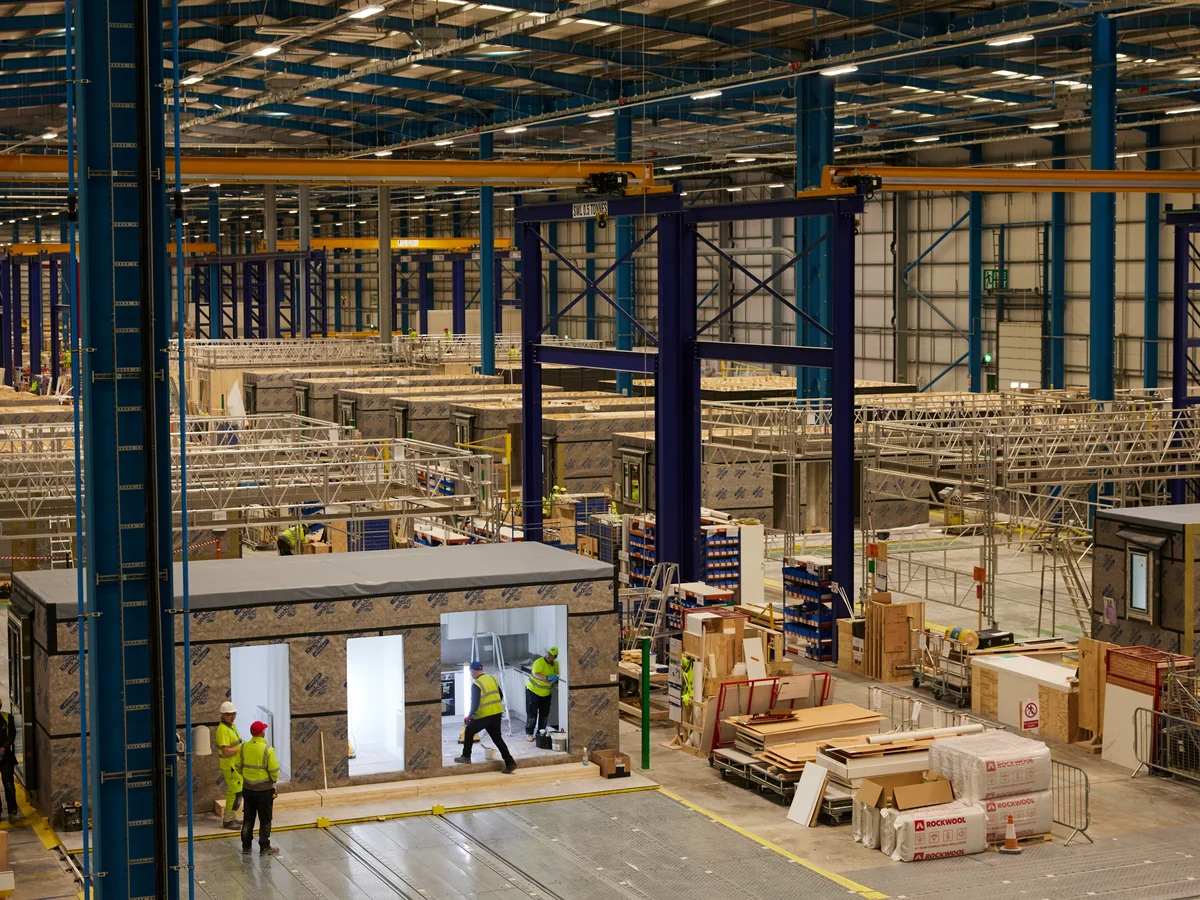
The buying process is usually straightforward, but it goes smoother when you treat it like a project with clear stages rather than a single purchase. Typical steps look like: pick a base model, define your specification (layout tweaks, finishes, heating, kitchen/bathroom choices), sign a contract, then the off-site build begins. After that comes delivery, positioning on site, and hooking up services.
Lead times vary, so early planning is your friend-especially if you’re aiming for a particular season (for example, being ready before peak holiday months). Payment stages are commonly split across milestones, such as deposit, start of production, mid-build, and pre-delivery or handover. The exact structure differs, but you should always feel like the stages match real progress, not vague promises.
Before you commit, have an honest call about your plot and your goals. A good supplier will ask about access, utilities, intended use, and finish level, and they’ll tell you upfront what’s realistic. If you are exactly the type of person who is looking for modular homes for sale, be sure to check out some examples here: https://home-containers.com/en/living-containers/.
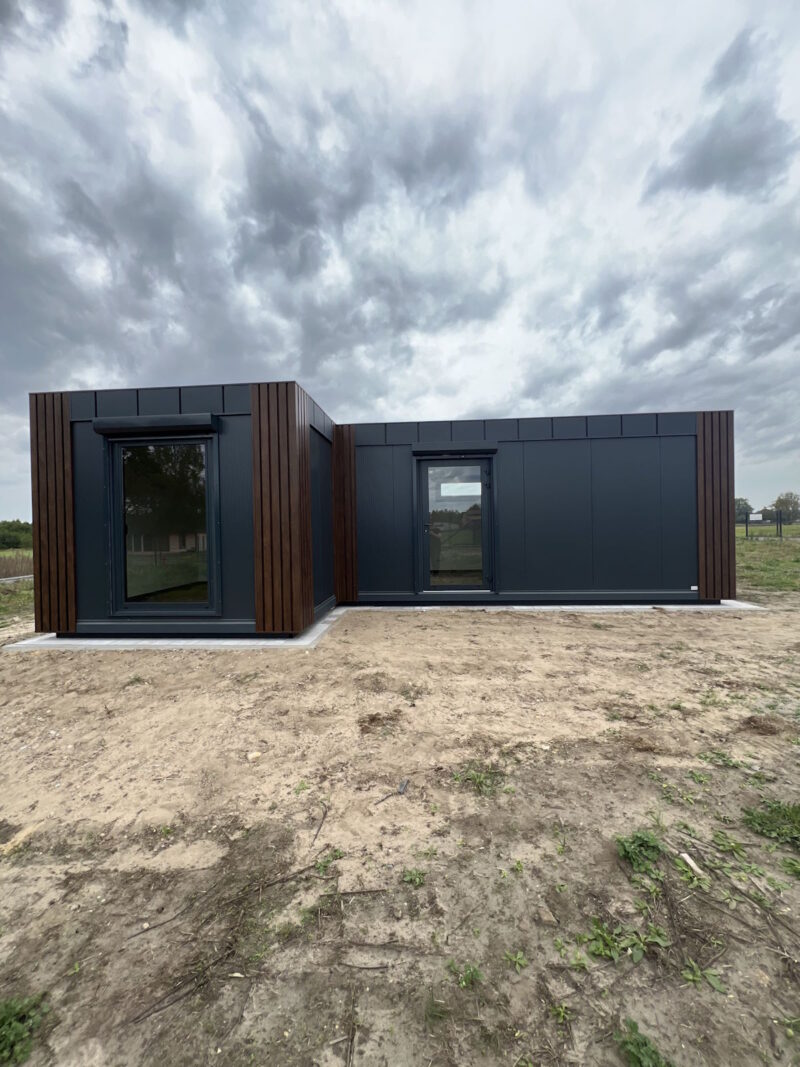
If you’re browsing options from a specialist like Global Home Containers, focus your questions on what’s included, what’s optional, and what the site needs to be ready for delivery-those three answers usually tell you everything you need to know.