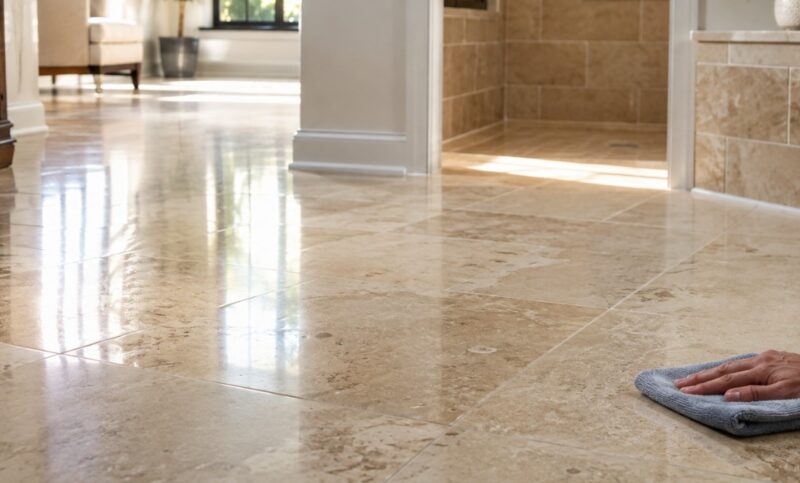
Natural stone and tile are built to last, but even durable surfaces can look tired long before they need replacing. In offices, hotels, restaurants, and other busy properties, grit, spills, moisture, foot traffic, and cleaning residue slowly change the finish. The key is not cleaning harder. It is using the right maintenance at the right time.
A good natural stone and tile care plan prevents avoidable damage, keeps high-visibility areas looking consistent, and helps postpone expensive restoration or replacement. Once you understand what causes wear, keeping stone and tile looking new becomes much easier.
Protect the Surface Before Wear Becomes Obvious
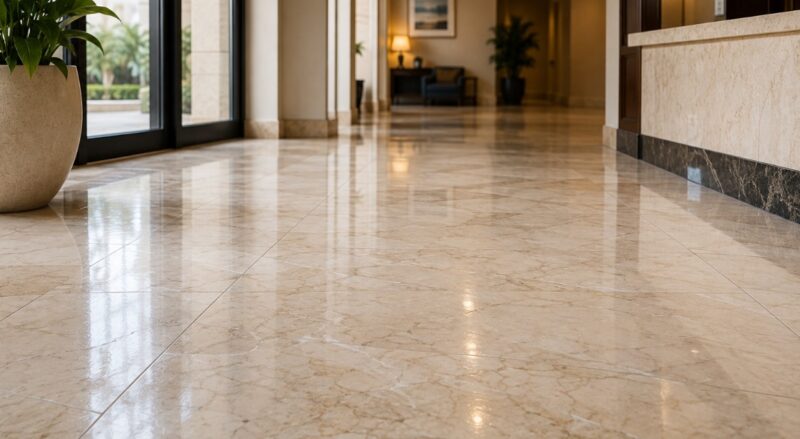
Start with the material, not the cleaner. Marble and limestone are calcium-based stones, so acidic products can etch them. The Natural Stone Institute advises against vinegar, lemon, and other acidic cleaners on calcareous stone and recommends neutral cleaners, stone soap, or mild detergent for routine care.
Dull marble is not always dirty. Fine scratches, etching, and traffic wear can change the finish itself. Professional marble restoration and sealing addresses that damage through stone-specific honing, polishing, sealing, and protection. Renue Hawaii notes that restoration can be an alternative to replacement when the stone is still structurally sound. For commercial properties, that means maintaining visual quality while extending the useful life of an expensive surface.
Keep Grit and Cleaning Residue Under Control
A lot of floor wear starts with ordinary dirt. Sand and grit are abrasive, so shoes, carts, and luggage can drag those particles across polished stone. The Natural Stone Institute recommends frequent dust mopping and entrance mats to reduce abrasive soil before it damages the surface.
A practical routine should focus on basics:
- Remove dry soil before wet cleaning
- Use clean mop heads and fresh rinse water
- Blot spills instead of spreading them
- Place effective matting at busy entrances
More cleaner is not necessarily better. The Institute also notes that too much soap or cleaner can leave film and streaks. In a commercial setting, residue can make a floor look dull even when it is cleaned regularly. Good maintenance removes contamination completely instead of leaving chemistry behind.
Match the Treatment to the Problem
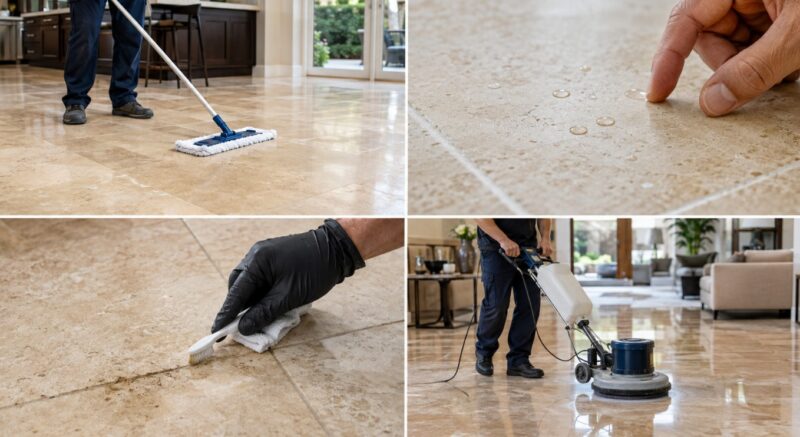
Cleaning, sealing, and restoration solve different problems. Using the wrong one can waste time without improving the surface.
| What you see | What to consider |
| Everyday soil | Compatible routine cleaning |
| Rapid liquid absorption | Sealer evaluation |
| Localized stains | Targeted stain treatment |
| Etching or worn polish | Honing, polishing, or restoration |
This distinction matters with grout too. The Tile Council of North America explains that cementitious grout is porous and can absorb stains. It also warns that acids can attack cement-based grout, so stronger acidic cleaning is not automatically the answer when joints start darkening.
If a floor still looks tired after proper cleaning, first determine whether the problem is soil, staining, residue, or actual surface damage.
Use Sealing as Protection, Not a Cure
Sealing can be useful, but it does not make natural stone maintenance-free. The Natural Stone Institute describes many penetrating stone sealers as impregnators that make stone more stain resistant rather than stain-proof. It also notes that some stones may not need sealing, so the decision depends on the stone, finish, exposure, and product guidance.
What Sealing Cannot Fix
A sealer will not remove scratches, restore worn polish, or repair acid etching. If marble remains cloudy after correct cleaning, the issue may be wear rather than dirt.
Did you know? Penetrating sealers are mainly intended to reduce how easily liquids and staining agents enter the stone. They do not make the material stain-proof or protect acid-sensitive stone from etching.
Sealing works best as one part of a broader maintenance plan, alongside correct cleaning and timely restoration.
Know When Routine Cleaning Has Reached Its Limit
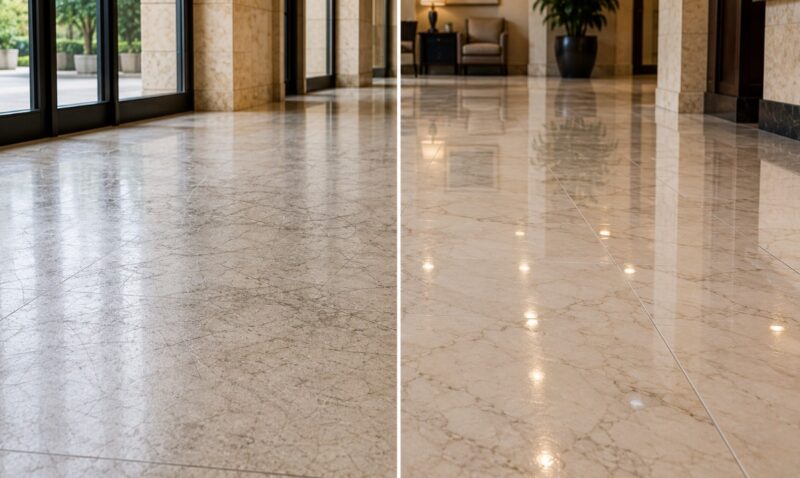
If marble stays dull after proper cleaning, the problem may be surface damage rather than dirt. Fine scratches, etching, and traffic wear can affect how the stone reflects light, and regular cleaning will not correct that damage.
Professional restoration can address worn surfaces through honing and polishing, helping restore clarity and appearance without replacing stone that is still in good condition. For commercial properties, that means better-looking floors, more predictable maintenance, and a longer useful life for existing surfaces.
Keeping natural stone and tile looking new comes down to early care: control grit, use compatible cleaners, remove residue, seal when appropriate, and restore worn areas before damage becomes severe.