Period homes rarely fail because they are old. They fail because water is allowed to enter, cannot escape, and is then hidden behind a repair that was never compatible with the original building.
That distinction matters when you are searching for advice on Sydney wall crack repair or trying to solve a damp patch in a Georgian terrace. The location may change, but the first question does not: what is causing the crack or moisture, and how is water moving through the wall?
Older UK homes need a slightly different maintenance mindset from modern cavity-wall houses. Many were built with solid brick, stone, timber frame, cob, lime mortar and lime render. These materials can absorb small amounts of moisture and release it again. The job is not to make every surface impermeable. It is to keep the building’s moisture balance working.
Start with the water, not the stain

A brown mark on an internal wall is evidence of moisture, not a diagnosis. It might come from a cracked render coat, a leaking gutter, a defective flashing, a raised external ground level, a blocked airbrick, a leaking pipe or condensation on a cold surface. Treating the visible patch without finding the source is how expensive work gets repeated.
Historic England’s guidance on investigating moisture in traditional buildings makes the same essential point: excess moisture can have several causes, and an incorrect diagnosis can make the problem worse rather than better.
Before specifying waterproofing or render replacement, inspect the whole route water could take:
- Roof coverings, valleys, leadwork, abutments and chimney flashings.
- Gutters, hopper heads, downpipes, gullies and the ground immediately below them.
- Cracks, hollow areas, bulges and missing sections in external render.
- Mortar joints, window junctions, sills and door thresholds.
- External ground levels, airbricks and under-floor ventilation.
- Internal humidity, extractor fans, window reveals and cold corners.
Take photographs after heavy rain if you can do so safely. Water marks often tell a clearer story when the weather has recently tested the elevation.
Why “waterproof” can be the wrong goal
Modern construction often keeps water out with cavities, membranes, damp-proof courses and vapour-control layers. A traditional solid wall behaves differently. Its outer finish, masonry and mortar work together as a permeable system, with moisture moving in and out as conditions change.
This is why a hard cement render or waterproof masonry coating can cause trouble on an older wall. It may shed some rain initially, but cracks and junctions still admit water. Once inside, the dense coating can slow evaporation. The result may be damp masonry, frost damage, salt deposits, mould or decay to embedded timber.
Historic England’s advice on repairing older walls recommends matching repair materials to the existing wall and warns that modern impervious fillings and coatings can accelerate decay. The advice is particularly important for soft brick, earth walls and timber-framed buildings.
There is a reasonable opposing view: in an exposed coastal location, a tougher cement-based finish can appear to offer the most immediate protection from driving rain. That argument makes sense for some modern substrates and carefully designed systems. My view is more cautious for period homes: durability is not the same as hardness, and a finish that cannot accommodate movement or release moisture is a poor bargain if it protects the surface by damaging the wall behind it.
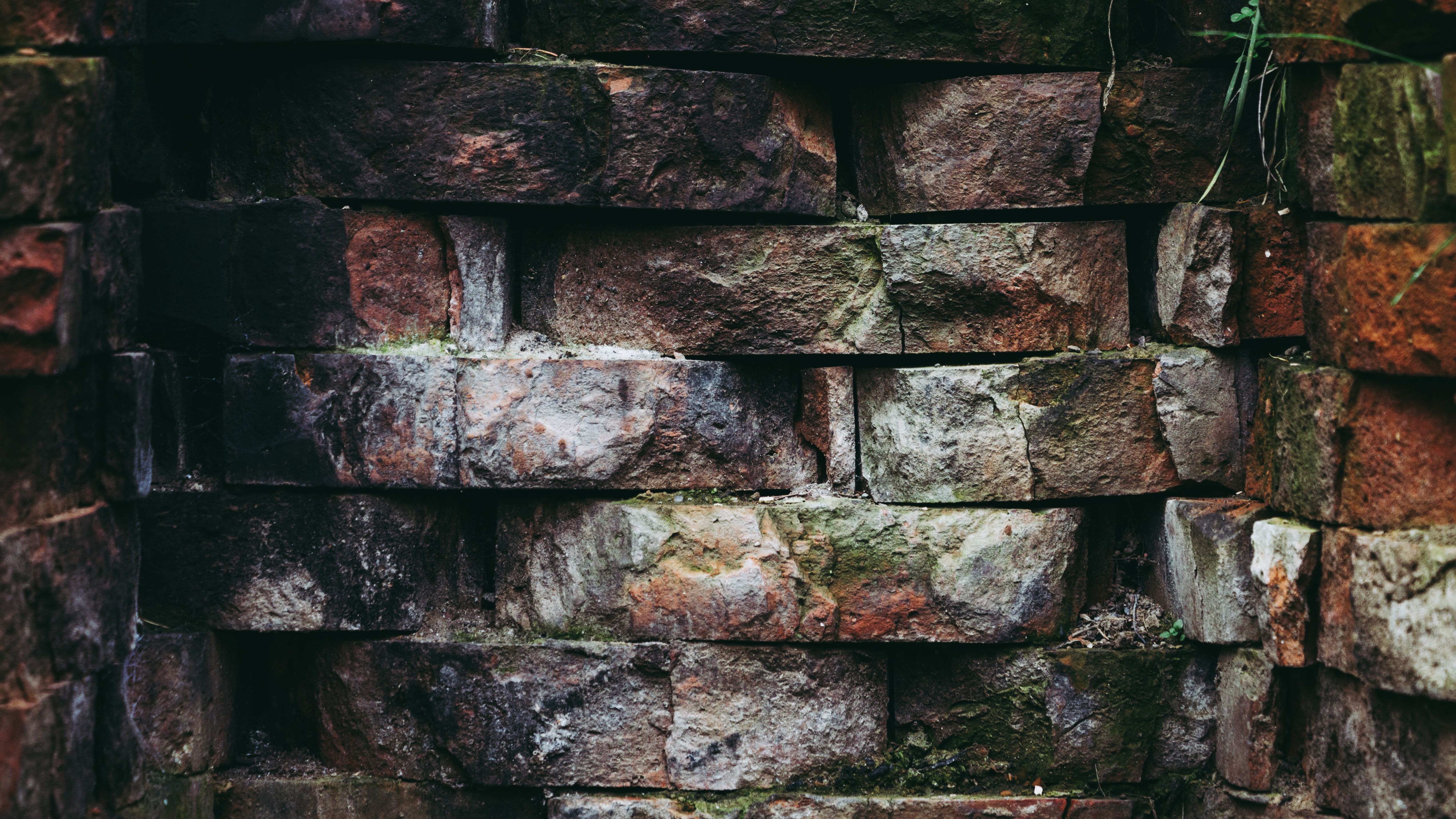
This weathered appearance is not, by itself, proof that the wall needs a waterproof coating. Moss, staining and eroded joints should prompt inspection, but aggressive cleaning or sealing can remove protective surface material and alter how the wall manages moisture.
Render maintenance: small defects deserve early attention
Render is not just decoration. On many older properties it is the weathering coat that protects vulnerable masonry, earth infill or timber framing. A small defect can therefore become a water-entry point.
Walk around the building at least twice a year and look for:
- Fine cracking around windows, corners and changes in material.
- Long horizontal or stepped cracks that may indicate movement beneath the render.
- Bulging or hollow-sounding areas where render has separated from its backing.
- Blistering, flaking paint, salt marks or damp patches inside.
- Open edges around pipes, cables, sills and roof abutments.
- Vegetation growing from cracks or retaining moisture against the wall.
Do not automatically fill every crack with a rigid exterior sealant. A hairline crack in lime render may be part of normal movement and can be dealt with differently from a widening structural crack. Larger cracks, recurring cracks and cracks that pass through masonry should be assessed before cosmetic filling takes place.
The principle is familiar in specialist Sydney wall crack repair: repair is only durable when the underlying cause is understood. For a UK period property, that cause might be settlement, thermal movement, failed drainage, timber decay, a leaking roof junction or incompatible cement repairs.

When a patch repair is appropriate, the new material should match the existing render in composition, texture, strength and finish. A visible patch is usually preferable to an invisible but incompatible repair that traps water. On a listed building, even apparently modest changes may require advice from the local conservation officer.
Choosing lime, not just choosing a product
“Lime render” is not one universal recipe. The correct mix depends on the substrate, exposure, existing materials, finish and the amount of movement the wall must accommodate. A specialist should consider whether the building has soft brick, stone, cob, wattle and daub, timber framing or a previous cement coating.
Lime is often appropriate because it is relatively flexible and permeable, but that does not mean any bag labelled lime is automatically suitable. Some hydraulic lime products are much harder than others. A strong render applied to a weak historic substrate can simply move the failure into the masonry.
Ask for a sample panel before committing to a large elevation. It lets you check colour, aggregate, texture and weathering, and gives a conservation professional something concrete to approve if consent is relevant.
Paint matters too. Dense modern masonry paints can reduce evaporation. Limewash or another compatible breathable finish may be more suitable, depending on the existing render and the building’s exposure. Never paint over active damp and assume the problem has been solved because the stain has disappeared.
Waterproofing details that prevent bigger repairs
Most useful waterproofing work on a period home is unglamorous. It keeps rainwater moving away from the wall rather than trying to turn the wall into a sealed container.
- Clear gutters and inspect joints. A small leak concentrated beside a wall can saturate masonry repeatedly.
- Check downpipes from top to bottom. Look for splits, loose brackets, failed shoes and discharge too close to the foundations.
- Keep splashback under control. A sound hopper, gulley or soakaway is more useful than a coating applied over a wet wall.
- Protect junctions. Window heads, sills, roof abutments and parapets need careful weathering details because they combine different materials and movement.
- Keep the base of the wall visible. Raised paving, soil and dense render can bridge ventilation or allow moisture to collect at low level.
- Preserve ventilation. Do not block airbricks or seal every gap around a suspended timber floor in the name of draught-proofing.

A membrane can be the correct detail in a modern construction system or a carefully designed below-ground application. It is not a universal answer for a solid historic wall. Before using one, establish where it sits in the building’s moisture strategy and what happens at its edges, fixings and junctions.
When the inside of the house is part of the problem
External waterproofing cannot solve condensation created indoors. Cooking, bathing, drying clothes and ordinary breathing all add water vapour to the air. If warm, moist air meets a cold wall or window reveal, condensation can look very similar to penetrating damp.
Improve extraction in kitchens and bathrooms, use ventilation consistently and avoid large swings between cold and heavily heated rooms. If mould returns on the same cold corner while the external envelope is sound, investigate humidity and thermal performance rather than ordering another coat of render.
There is also a safety reason not to seal a building indiscriminately. Historic England notes that very damp timber can reach a moisture content of around 20%, at which point conditions may favour timber decay and insect attack. The figure is not a DIY diagnostic threshold, but it shows why a hidden leak beside a beam or lintel deserves prompt attention.
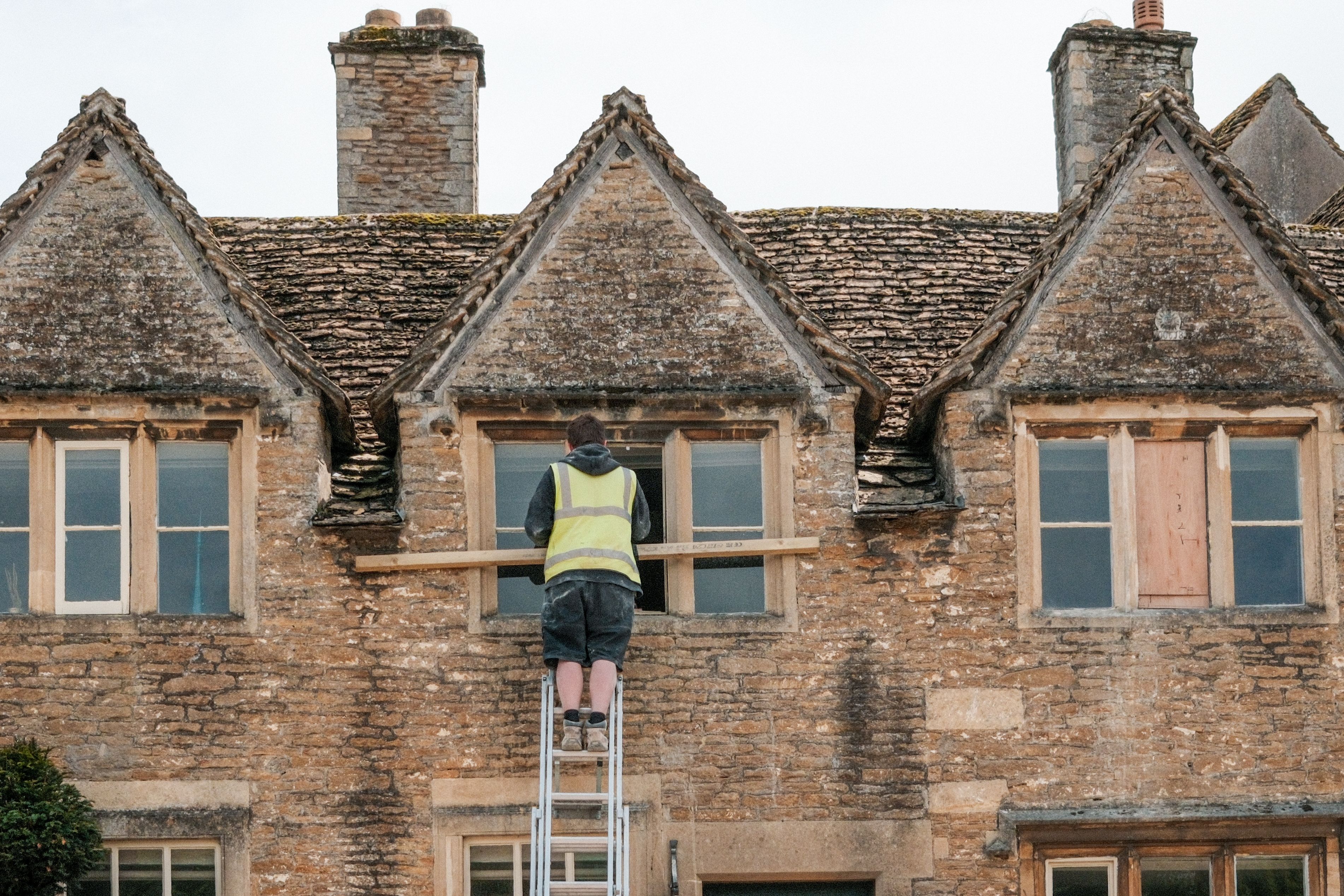
Good repairs are usually quiet: a gutter joint replaced, a failed patch removed, a lime mortar selected to match the wall, or a blocked airbrick uncovered. They may not transform the appearance of the property, but they stop small sources of wetting becoming structural work.
A practical maintenance rhythm
After severe weather: check roof edges, gutters, downpipes, chimney render and the most exposed elevation.
Twice a year: clear rainwater goods, inspect render and pointing, remove vegetation from the wall face, and check that external ground has not been built up.
Before major repair: photograph defects, map damp internally and externally, identify previous materials, and obtain a written specification from someone experienced with traditional buildings.
Before work on a listed property: speak to the local planning or conservation team. Consent requirements vary with the significance of the existing finish and the nature of the proposed alteration; do not assume that a “repair” label removes the need for permission.
Cadw’s maintenance guidance for historic buildings puts the wider principle well: regular care improves resilience and reduces the need for new materials. That is a better long-term waterproofing strategy than waiting until a wall is saturated and then applying the strongest product available.