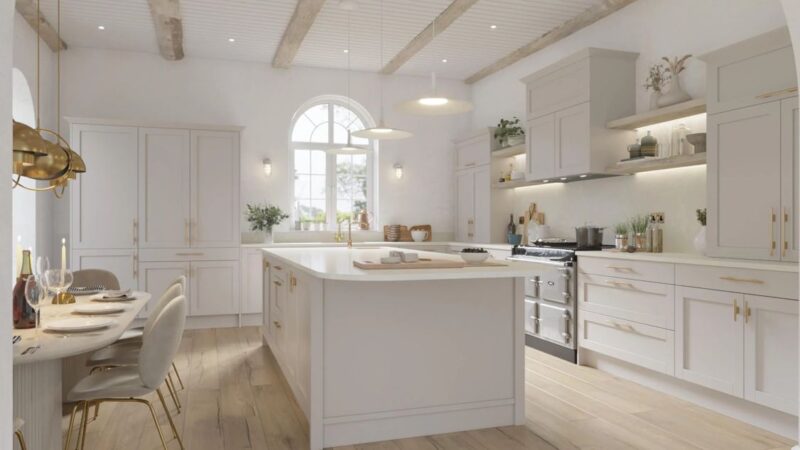
British homes come in an enormous variety of architectural styles. Victorian terraces, Edwardian houses, 1930s semis, post-war properties and modern developments all have their own proportions, layouts and decorative features. As a result, choosing a kitchen style that feels appropriate can sometimes be surprisingly difficult.
Shaker kitchens have remained popular partly because they can adapt to this variety. Their straightforward panelled doors have a traditional foundation, but their simple appearance allows them to work equally well in contemporary interiors. Rather than being associated with just one period, shaker cabinetry can be adjusted through colour, handles, worktops and layout to suit many different homes.
A style that suits period property without pretending
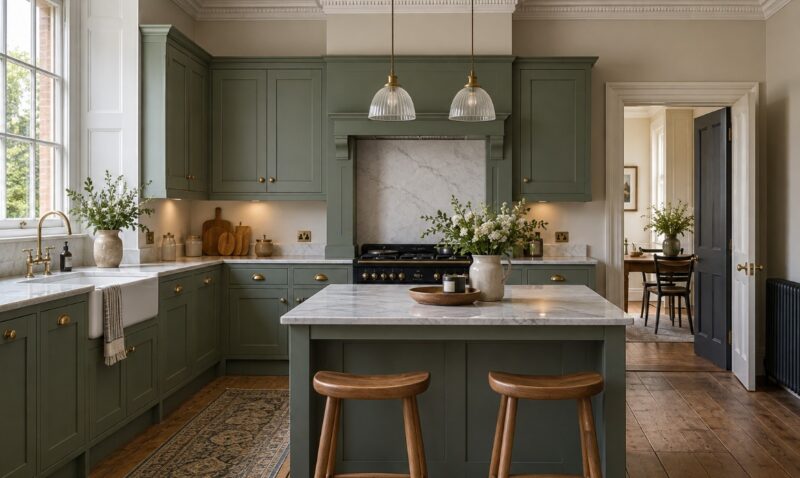
Older British properties often contain architectural details that deserve to remain visible. High skirting boards, timber flooring, decorative cornices and original doors can all contribute to the character of a room. Shaker cabinetry tends to complement these features without trying to imitate them too closely.
The recessed-panel design has a traditional appearance, so it can sit comfortably within Victorian and Edwardian interiors. Instead of introducing an obviously modern contrast, it provides a connection between classic architectural features and the practical requirements of a modern kitchen.
It also works naturally in many 1930s houses. These properties generally have simpler decorative details and practical proportions, making understated shaker doors a suitable match.
It does not look out of place in a new build either
The simplicity of shaker cabinetry means it can be adapted well beyond traditional interiors. In a contemporary home, slimmer frames, muted colours, modern worktops and streamlined handles can give the same basic door style a much more current appearance.
This is particularly useful in open-plan homes, where the kitchen forms part of a larger living and dining area. A heavily traditional kitchen can sometimes feel disconnected from modern furniture and finishes, whereas a contemporary interpretation of shaker cabinetry can blend into the wider room.
The style therefore does not require homeowners to choose between classic character and modern practicality. Small design decisions can shift its overall appearance considerably.
It handles British light
Natural lighting can have a significant influence on the appearance of kitchen cabinetry. British homes frequently experience cloudy skies and softer daylight, particularly during the darker months of the year.
Very flat cabinet doors can sometimes appear visually plain when there is little direct sunlight. Shaker doors offer more definition because the recessed centre creates subtle changes in light and shadow across the cabinet surface.
This extra depth can help cabinetry appear more interesting throughout the day. Even when the room is relying heavily on artificial lighting, the framed design provides some visual structure without becoming overly decorative.
It survives colour changes
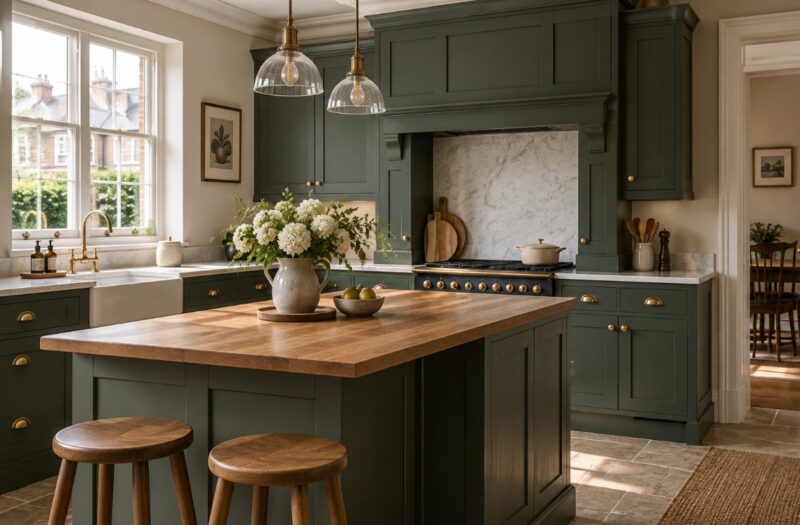
Kitchen trends can change considerably over the years, but replacing an entire kitchen every time personal tastes develop is rarely practical. Shaker doors provide a useful foundation because their appearance can change substantially through colour and hardware.
For example, a light neutral kitchen can later be given a stronger character with a darker paint shade. Alternatively, changing handles and worktops can refresh the room while leaving the existing cabinet design largely unchanged.
This flexibility is particularly useful for homeowners who expect their kitchen to remain in place for many years. Instead of being tied to one particular trend, the basic shaker design can evolve as decorating preferences change.
It works with the storage British houses actually need
Many British kitchens have to make efficient use of limited space. A kitchen may need to provide room for cooking equipment, food supplies, recycling, laundry appliances and everyday household items, sometimes within a relatively compact footprint.
Shaker cabinetry can accommodate these requirements without making the room look excessively busy. Tall cabinets, integrated appliances, drawers and additional storage can all be incorporated while the simple door design keeps the overall appearance relatively calm.
This is especially useful in smaller kitchens. When storage takes up a significant proportion of the available wall space, an uncomplicated cabinet style can prevent the room from feeling visually crowded.
Getting the details right
Although shaker kitchens are versatile, the final result depends heavily on proportion and the smaller design choices.
The width of the door frame is one important consideration. A wider frame can reinforce a more traditional aesthetic, while a narrow frame can create a cleaner and more contemporary look. The appropriate choice will depend on both the property and the size of the kitchen.
Handles can change the character of the cabinetry too. Traditional knobs or cup pulls can emphasise the classic side of shaker design, while longer bar handles tend to create a more modern appearance. Consistency is important, as mixing unrelated hardware styles can make the finished kitchen feel less cohesive.
Cabinet height also deserves attention. In a property with tall ceilings, leaving a large unused area above wall units may make the room appear unfinished. Extending cabinets upwards or creating a purposeful display area can make better use of the available height.
It is easy to live with
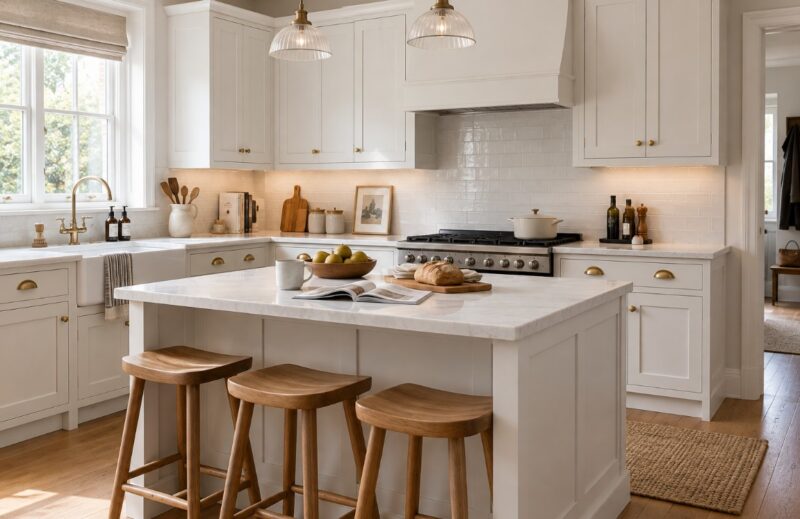
A kitchen needs to function well every day, not simply look attractive when it is photographed. Shaker cabinetry offers a relatively straightforward design that suits busy households.
The recessed panels provide character without the complicated moulding found on some traditional cabinet styles. Painted surfaces can also be refreshed when they eventually show signs of everyday use.
This can be particularly helpful in family kitchens, where cabinets are exposed to regular cooking, cleaning and general household activity. Rather than relying on an extremely intricate design, shaker cabinetry can develop a lived-in appearance while remaining visually appealing.
Seeing it in context
Since shaker kitchens can look very different depending on their frame size, colour, handles and surrounding materials, photographs of complete installations can provide more useful inspiration than individual door samples. This example demonstrates how the style can be adapted through different design choices.
Looking at a finished kitchen also makes it easier to understand how the cabinetry works alongside worktops, flooring, lighting and appliances. These surrounding elements can significantly influence whether the final appearance feels traditional, transitional or contemporary.
Why it has not been replaced?
The continuing popularity of shaker kitchens is largely connected to their adaptability. They can complement the architectural details of an older British home while also fitting comfortably into a contemporary property.
Their relatively simple appearance gives homeowners plenty of freedom to experiment with colours, handles, worktops and accessories. At the same time, the cabinetry can provide substantial storage without making smaller rooms feel unnecessarily heavy.
For a country with such a varied collection of homes, that flexibility is particularly valuable. Shaker kitchens have lasted not simply because they have a traditional association, but because their practical and visual qualities continue to suit the way British homes are designed and used.