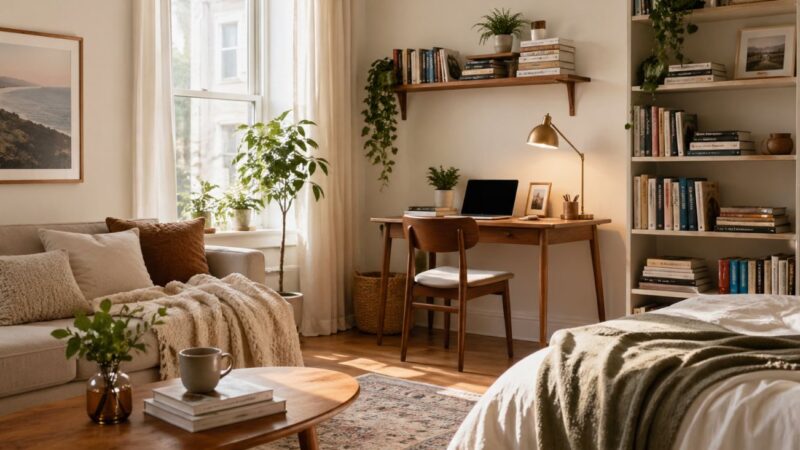
There is a particular discomfort that comes from spending time in a space that feels like it belongs to someone else. A rented apartment with white walls and no personal trace. A shared office that could belong to anyone. The discomfort is quiet and easy to dismiss, yet it tends to build. Spaces that carry no reflection of the person living in them can leave that person feeling subtly untethered.
Personalization goes deeper than aesthetics. The objects we choose, the colors we surround ourselves with, and the small details we add to a space all function as external expressions of an internal world. When a space reflects who we are, it anchors us.
Identity Needs a Place to Land

Identity needs to be expressed and reinforced as much as it needs to be felt. Hanging a photograph, displaying an object from a meaningful trip, or arranging a bookshelf in a personally significant way are all acts of self-articulation. People do this naturally and instinctively, even when they cannot fully explain why.
The connection between personal objects and identity has a neurological basis. Neuroimaging work published by the British Psychological Society found that the medial prefrontal cortex, a region associated with thinking about oneself, also activates when people view objects they own. Ownership literally recruits the same brain circuitry as selfhood. A cherished possession is, to the brain, a genuine extension of the person.
Gary Tucker, Chief Clinical Officer at D’Amore Mental Health, sees this play out in the people he works with. “When someone’s sense of self feels shaky during a big life change, a loss, or a period of low confidence, the objects around them often do a lot of the heavy lifting,” Tucker says. “The things we choose to keep and display become a quiet way of telling ourselves, and others, who we are.” A personally curated environment can serve as a visual anchor when everything else feels in flux. Grounding personalization and over-identification with possessions are meaningfully different things, and it is worth staying curious about which one is at play.
Space, Safety, and the Nervous System
A personally meaningful environment has effects that go well beyond comfort. A secure and familiar space lowers background anxiety, supports focus, and improves emotional regulation. When an environment feels predictable and personally resonant, the nervous system can genuinely settle. Familiar objects act as emotional anchors, cueing a quiet sense of safety that extends well beyond their physical presence.
Zoe Tambling, LMFT, Clinical Director at Anchored Tides Recovery, explains the mechanism clearly. “Our nervous systems are constantly reading the room, even when we’re not aware of it, and a space that feels predictable, warm, and familiar can genuinely help the body settle out of a stress response,” Tambling says. “Something as simple as good lighting or a corner with personal meaning can shift a person from on-edge to at ease.” An anonymous or depersonalized space can have the opposite effect, sustaining a low-level undercurrent of unease that is difficult to name. For people managing chronic stress or a trauma history, the environment is an active part of the emotional landscape.
For people in transition, whether moving cities, rebuilding after a loss, or settling into a new phase of life, personalizing a space becomes an act of establishing safety and belonging where none yet exists. Placing familiar objects in a new environment is a way of telling the nervous system that this, too, can be home.
Why a Personalized Space Does Psychological Work
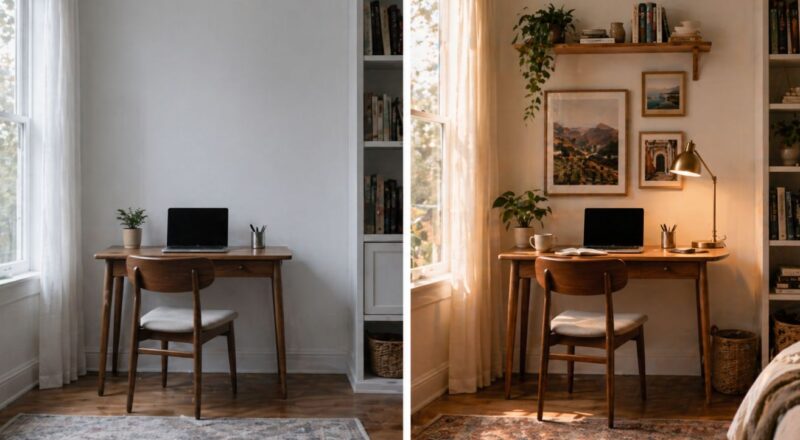
A qualitative study on outpatient mental health settings found that patients consistently linked their emotional well-being and sense of recovery to four qualities of their physical environment. Those qualities were sensory design, opportunities for engagement, relational cues, and the affective states the space evoked, including feeling safe, calm, in control, and self-aware. Certain environments felt grounding and protective. Others heightened stress and vulnerability.
Michael Anderson, Licensed Professional Counselor at Healing Pines Recovery, finds that finding significant. “What I find compelling about this research is that patients themselves connected their emotional recovery to the physical feel of the space, not just the therapy happening inside it,” Anderson says. Personal artifacts engage all of those qualities at once. A reading nook with a meaningful photograph and a carefully chosen plant introduces sensory richness, invites gentle engagement, signals relational bonds, and triggers a settled emotional state. The specific combination that works will vary by person, since some feel most grounded in quiet, private spaces while others need social cues and shared objects around them.
Objects That Hold Life
Personal objects signal identity in the present moment, and they also hold it across time. Objects tied to specific experiences, such as a travel souvenir, a piece of creative work, or a family heirloom, place a person within a lived narrative. A photo wall or a shelf of meaningful items grounds someone in their own story, and the sensory details of a well-curated space, including scent and texture, can cue specific emotional memories and reinforce a coherent sense of personal history.
Kevin Belcastro, LMFT, Clinical Director at San Diego Transformation Center, describes what happens when that thread is broken. “When someone goes through a major disruption like grief, a move, or a divorce, one of the quieter losses is the thread of their own story feeling cut,” Belcastro says. “Surrounding yourself with objects tied to real memories can help stitch that continuity back together.” In periods of depression or significant life change, the internal sense of narrative often feels fragmented. Objects with strong affective charge, sometimes called emotional talismans by designers and clinicians alike, offer access to earlier versions of the self and help restore a sense of coherent personal history.
A personalized space is never truly finished, which is fitting. Identity shifts over time, and the spaces we inhabit should shift alongside us. Keeping that process alive is one of the quieter ways we affirm that we have a stable and meaningful place in the world.