Not every boundary is equal. Some pool fences are built because regulations demand them, others because safety is non-negotiable. But modern pool fencing isn’t just compliance anymore, it’s strategy. It’s how you protect without closing off, elevate without overwhelming, and create harmony where water, landscape, and lifestyle meet.
Infusing Transparency Strategy to Enhance Supervision and Flow
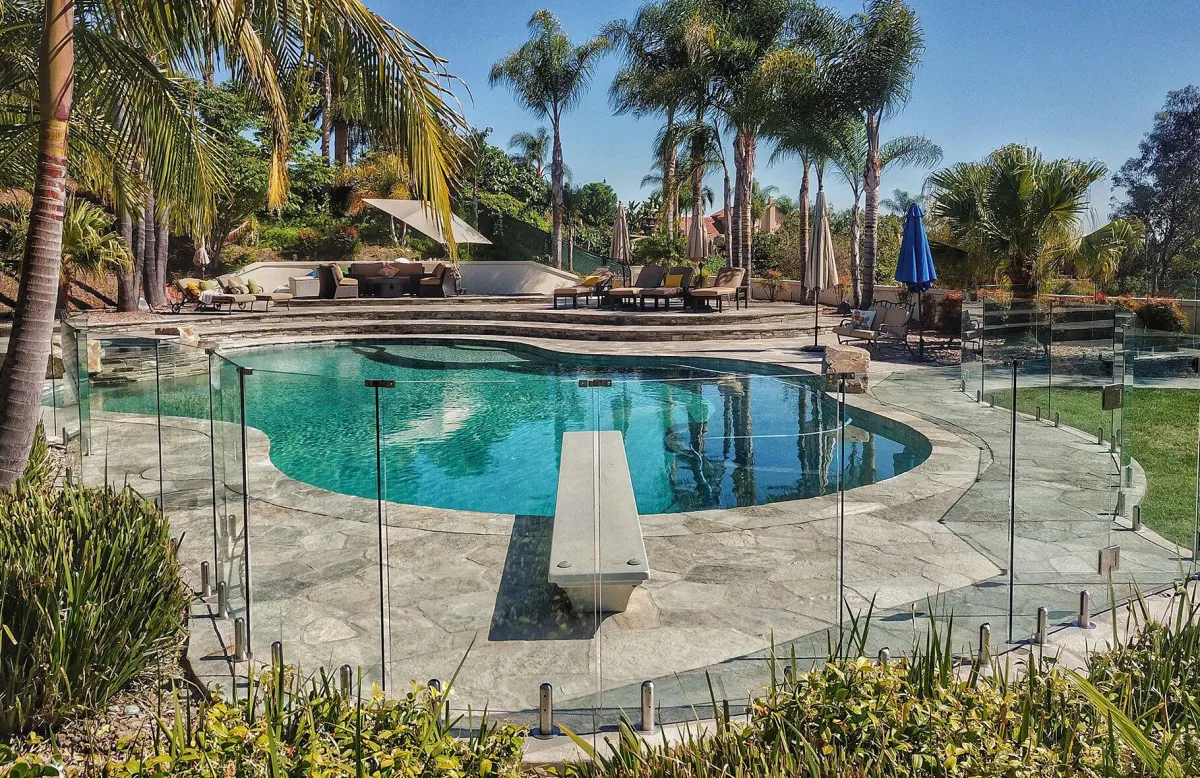
Transparency turns fencing from blockade into channel. For example, with quality Glass pool fencing profiles, the pool stays connected to its surroundings, watched without being walled in. Such a strategy enhances critical aspects of poolside safety and experience, including;
- Effortless supervision ─ Clear sightlines give parents and hosts command without hovering.
- Spatial continuity ─ Glass erases boundaries, letting even small yards breathe larger.
- Light and openness ─ Panels reflect water and sky instead of casting bulk and shadow.
That isn’t cosmetic, it’s strategic. Transparency safeguards by insisting the pool remain in plain view, transforming the barrier into a lens.
Leveraging Minimalism Designs as Tactical Clarity
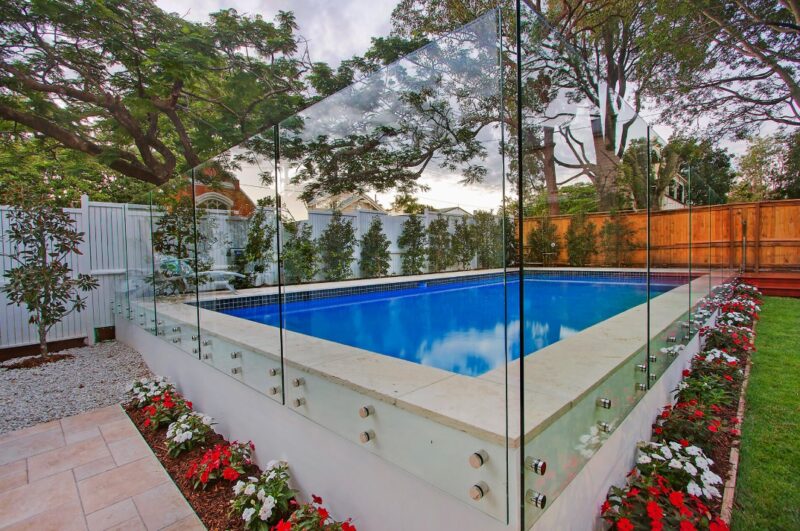
Minimalism is not a style for its own sake; it’s a discipline. It rejects clutter, strips away distraction, and leaves behind only intent. A fence reduced to essentials becomes sharper: elegant, yes, but also uncompromising in safety.
- Clean geometry ─ Slim frames, straight lines, frameless or semi-frameless glass, precision, not ornament.
- Fewer climb points ─ By eliminating rails and footholds, the fence closes gaps kids might test.
- Visual restraint ─ Dark aluminum or steel recedes, forcing the pool and landscape forward.
Here, minimalism isn’t austerity. It’s a strategy. The unnecessary is cut away until the fence itself becomes less wall, more silent protector.
Precision and Practical Integration as Design Intelligence
A fence should never look like an afterthought. Integration makes it part of the terrain, part of the architecture, woven in, not bolted on.
- Material match ─ Stone near stone, glass with modern builds, timber beside greenery.
- Terrain sensitivity ─ Curved edges, stepped panels, design that follows ground instead of fighting it.
- Dual-purpose use ─ Fences that double as garden backdrops or retaining walls.
Integration is foresight. It anticipates how sunlight shifts, how slopes carry lines, how materials converse. The fence becomes less an addition and more a continuation. The strategy is in erasing awkward junctions before they appear.
Being Pro-Technology for Smart Access
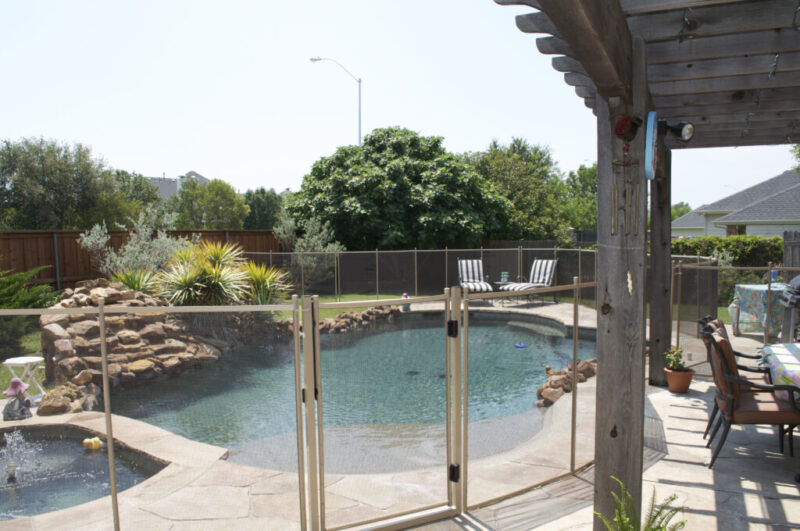
Fencing today is not just static—it moves, responds, and adapts. Automated gates are the prime example of a strategy applied through technology.
- Remote management ─ With automated gates, access aligns with modern lifestyles where ease and oversight go hand in hand.
- Smart layering ─ Pairing automation with durable fencing materials for a boundary that thinks as well as protects.
- Sliding or swinging gates ─ Controlled with precision, enhancing both convenience and security.
Here, the innovation isn’t in the motor; it’s in how access transforms from rigid to adaptive, aligning with daily use.
Materials as Carriers of Identity
Every material is more than its function; it tells a story of durability, upkeep, and character.
- Glass reveals with restraint ─ Transparent, modern, quietly bold.
- Aluminum resists ─ Light, strong, corrosion-proof.
- Timber warms ─ Organic, inviting, textured.
- Stone endures ─ Solid, timeless, anchored.
The strategy isn’t choosing what looks good now, it’s selecting what will keep speaking the same language in ten years, with minimal friction.
In conclusion, a pool fence is never just a fence. It is clarity where clutter could exist, transparency where walls could close in, integration where awkwardness could grow, and strategy where guesswork would fail. For homeowners, investors, or developers, the difference is not in the product but in the approach, where professionalism, foresight, and modern solutions align. Boundaries done well aren’t limits; they’re long-term assets.