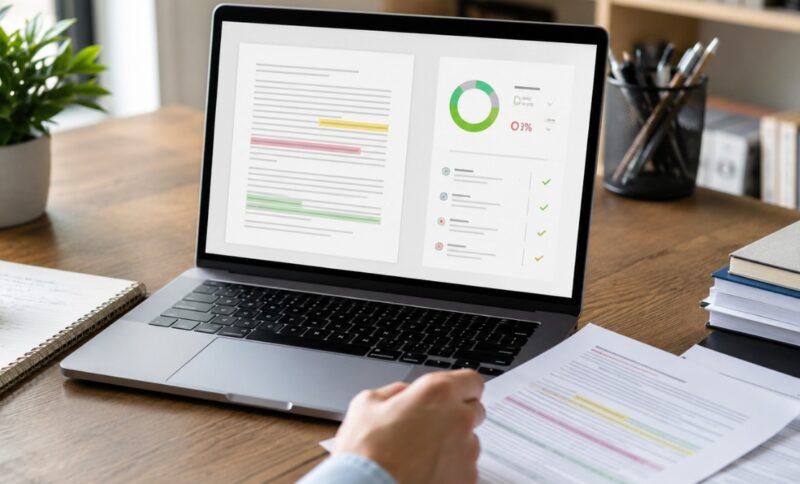
In the current digital age content creation is at an all-time high. Students, bloggers, researchers and professionals are constantly putting out material for academic, business and online use. But with the great amount of info available online the chance of accidental plagiarism has grown. That is which it is a must to use plagiarism detection tools in order to maintain originality and credibility in what is written.
Plagiarism tools, which are at your disposal, will identify what is out there on the web and in academic databases that may be out of your original work. By using these resources, authors can make sure their work is unique, properly cited, and free from issues that may damage their reputation or academic status.
What Is Plagiarism and Why It Matters

Plagiarism is the use of another person’s thoughts, words, or work without proper attribution. It may be done deliberately or carelessly, which is the case when writers do not properly cite their sources or use too many external references.
The results of plagiarism may be very severe:
- Penalties in academia such as failing grades or suspension
- Loss of credibility in professional writing
- Search engine penalties for duplicate content-rich sites
- Serious issues related to copyright violation
In that which regards these risks, originality is a requirement, not a recommendation.
Role of Plagiarism Checker Tools in Modern Writing
Plagiarism detection software looks at what is written and compares it to a vast database of web pages, academic journals, and publications. What is matched up is highlighted by the software, which also gives out a report of the similarity.
Writers can use these reports to:
- Rewrite or rephrase duplicate sections
- Add proper citations and references
- Improve content quality and originality
- Avoid accidental copying of existing work
Today’s tools also include grammar and writing support, which in turn makes them more valuable for students and professionals.
Grammarly and Its Plagiarism Checking Capabilities
Among what is an extensive array of writing tools out there, Grammarly stands out for its enhanced writing features. It checks grammar and spelling to be sure; also, within its premium version, it includes plagiarism detection.
Users go to Grammarly for a polished writing style at the same time, which also preserves their unique voice. It looks at what you write against a very large database and brings to your notice any issues of plagiarism, which in turn gives you a chance to fix them before you put your work out there, all while using the grammarly plagiarism checker for accurate scanning.
For people who include in their research discussions of plagiarism detection tools, the following is a resource you may find useful:.
This also includes a range of user-based conversations and perspectives on writing tools that present how they perform in the real world.
Benefits of Using Plagiarism Checkers
Plagiarism detection software also has a lot to offer beyond what basic duplicate search does. For example, in the case that we have:.
1. Ensuring Content Originality
These tools check that your work is original and free of unintentional use of existing content.
2. Improving Writing Skills
Through the review of flagged content, writers see also how to restructure and rephrase.
3. Maintaining Academic Integrity
Students are able to turn in assignments with confidence that they meet the institutional standards.
4. Enhancing SEO Performance
For webmasters and blog authors, original content is key to doing well in search engines.
5. Saving Time in Editing
Instead of going through each source by hand, we have plagiarism tools that identify issues in bulk.
Limitations of Plagiarism Detection Tools
While plagiarism tools are very useful, they are not perfect. To that effect:.
- They do not always detect paraphrased content accurately.
- Free ones also have restricted database access.
- False positive results at the present time in common phrases
- They need internet access for large data sets.
Due to these issues, human review is still a must. Writers should not put full trust in automatic tools but use them within a larger edit scheme.
Best Practices for Avoiding Plagiarism
To keep your writing original, try these:.
- Always put it in your own words.
- Quote or put your words in quotes when copying
- Cite all sources in the same format.
- Paraphrase information instead of copying directly
- Before you publish, run your work through a plagiarism checker.
By these means authors can greatly reduce the risk of accidental plagiarism.
The Future of Writing and Plagiarism Detection
As technology in AI grows, plagiarism detection tools are improving. We expect that in the future these tools will recognize not only direct copying but also complex paraphrasing and AI-generated similarities.
Also, in that which we are seeing is writing platforms’ inclusion of real-time originality features, which, as soon as a user begins to type in, they will see results. This is to make plagiarism prevention a smoother, more efficient process.
Conclusion
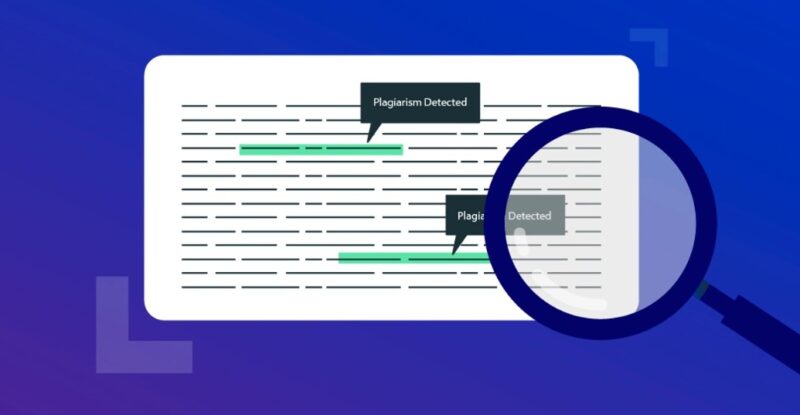
Plagiarism detection tools are reported to be of great importance in upholding originality, credibility, and professionalism in writing. As a student, content creator, or business professional, what you pass off as your own work must be unique to see success.
Tools such as Grammarly have at our disposal today, which have made it very easy to check and improve your written content; they offer up grammar correction and plagiarism detection in one package. At the same time the task of producing original content is still on the writer.
Through the use of technology, which is paired with strong writing skills, any individual is able to produce high-quality original content that stands out in today’s competitive digital world.