A large blank wall can make an otherwise comfortable living room feel unfinished, but filling it with random decor creates a different problem: clutter. So what should actually go there?
The answer depends on the wall’s scale, the furniture below it, and whether you need personality, light, storage, or simply a stronger focal point.
You do not need a full makeover to make that empty wall work.
Here’s What’s Inside
- Oversized art for a clean focal point
- Gallery walls for flexible, personal displays
- Large mirrors for brighter, more open-looking rooms
- Shelving or wall treatments for function and texture
Start With One Oversized Piece of Art
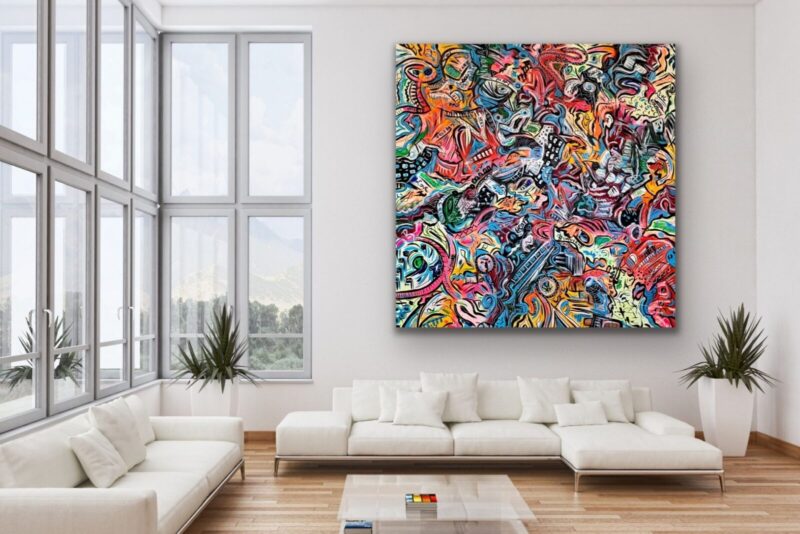
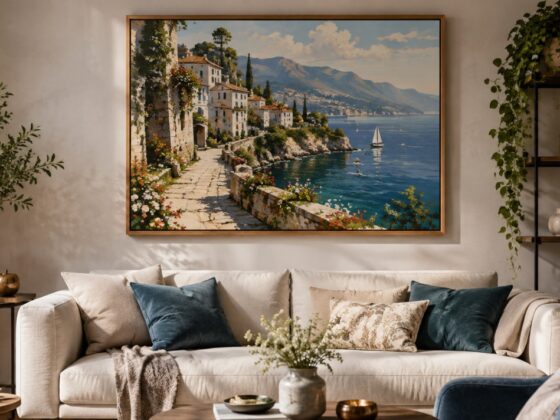
If you want the simplest answer to what to put on a large blank wall in your living room, start with one large artwork rather than several small pieces. Oversized wall art gives the eye a clear focal point and usually looks calmer above a sofa, console, or low cabinet.
A meaningful photograph can work just as well as a painting. A photo canvas is particularly useful when you want one travel image, family photo, landscape, or collage to occupy a substantial area without creating a full gallery wall. Framed options can also help tie the image into other wood, black, or white finishes already in the room.
Before ordering anything, measure both the wall and the furniture below it. The artwork should feel connected to the arrangement, not like a small picture floating in a sea of empty space.
Build a Gallery Wall With a Clear System
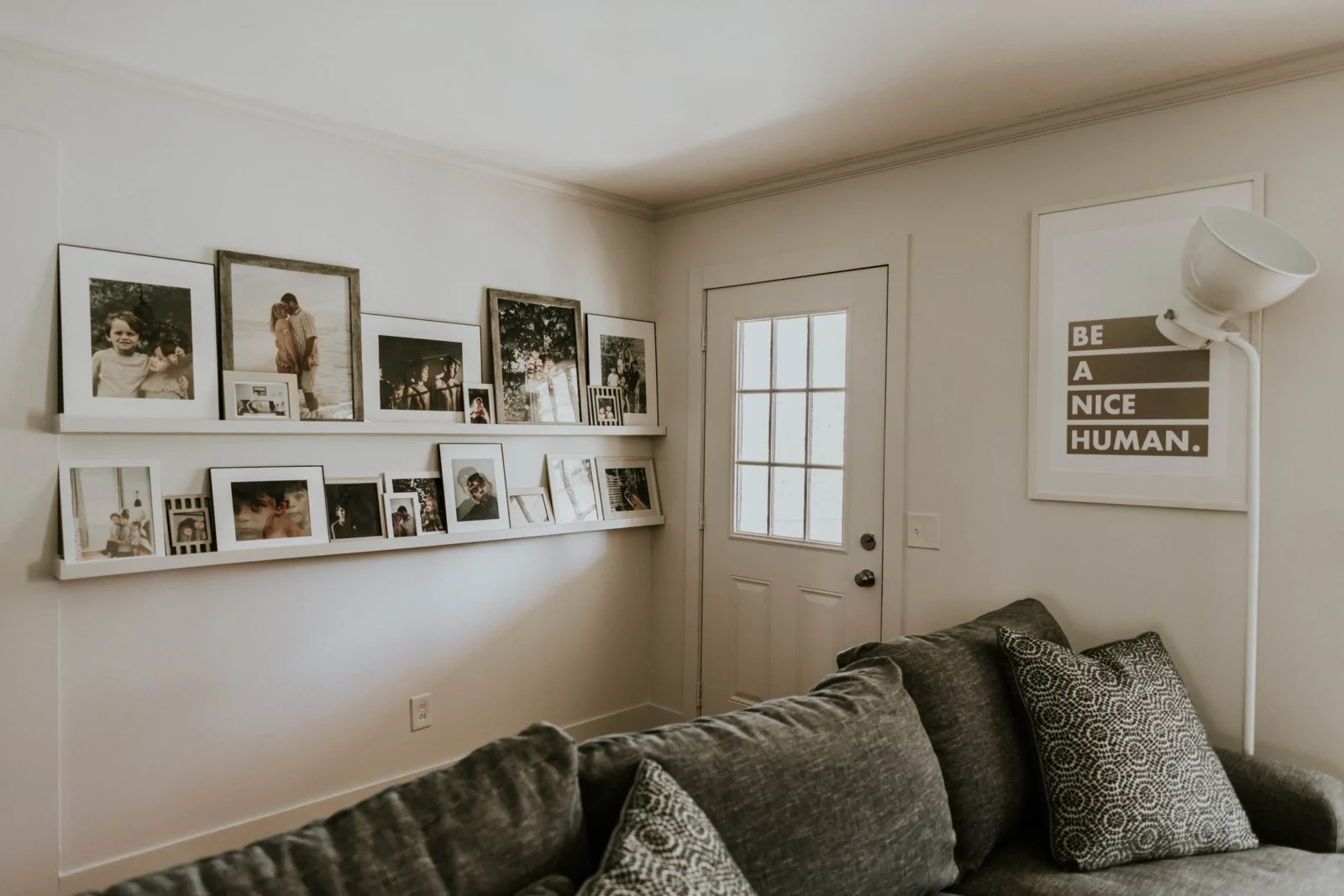
A gallery wall is a better choice when one oversized piece feels too formal or when you have several photographs, prints, drawings, and keepsakes worth displaying. Here’s the thing: variety works best when something still ties the arrangement together.
You could keep the frames the same colour, repeat two or three print sizes, or maintain consistent spacing. Lay everything on the floor first and photograph the arrangement before making holes.
Try combining:
- family or travel photography;
- small art prints and illustrations;
- one textile, plate, or dimensional object;
- a larger central piece that anchors the display.
Avoid spreading tiny frames across the entire wall. Instead, treat the collection as one large visual unit. This is especially important with living room wall decor above a long sofa, where scattered pieces can easily look undersized.
Use a Large Mirror When the Room Needs Light
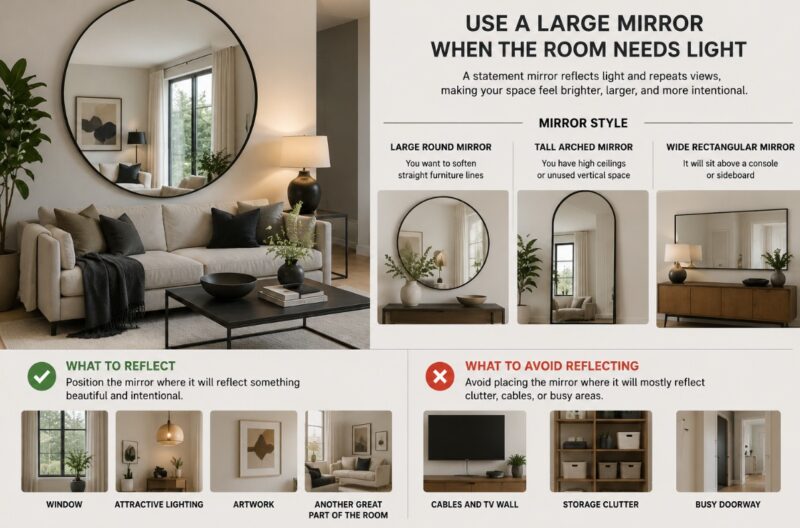
A statement mirror can fill a large wall while doing more than decorating it. It reflects existing light and repeats views from elsewhere in the space, making it particularly useful in a darker living room or an area with limited windows.
Let’s take a closer look at the options:
| Mirror Style | Works Best When |
| Large round mirror | You want to soften straight furniture lines |
| Tall arched mirror | You have high ceilings or unused vertical space |
| Wide rectangular mirror | It will sit above a console or sideboard |
Check what the mirror will reflect before mounting it. Ideally, position it where the reflection includes a window, attractive lighting, artwork, or another intentional part of the room.
A beautiful statement mirror loses much of its effect if its main view is cables, storage clutter, or a busy doorway.
Add Shelving or Texture When Art Is Not Enough
Some large blank walls need function rather than another picture. Floating shelves, shallow cabinetry, wall moulding, wood slats, or wallpaper can give a large surface structure while connecting it to the rest of your living room decor.
Floating shelves work particularly well if you like changing displays. Keep them edited by mixing a few books, ceramics, framed art, and perhaps a trailing plant instead of filling every centimetre.
For a stronger architectural effect, wall moulding or textured panels can make the wall interesting even with very little additional decoration.
Practical rule: decide whether the wall needs a focal point, useful storage, or architectural character before buying decor.
Renting? Picture ledges, leaning artwork, and removable wallpaper can create a similar effect without committing to major alterations. Always check mounting requirements and weight limits before hanging heavier pieces.
Choose Scale Before You Choose Style
The best large blank wall ideas are not necessarily the most dramatic. They are the ones that work with your furniture, lighting, room proportions, and things you already own.
Start by deciding what the wall needs to do. For a focal point, try oversized artwork. For more personality, create a controlled gallery wall. If the room feels dark, consider a statement mirror. If you need display space, shelving may make more sense.
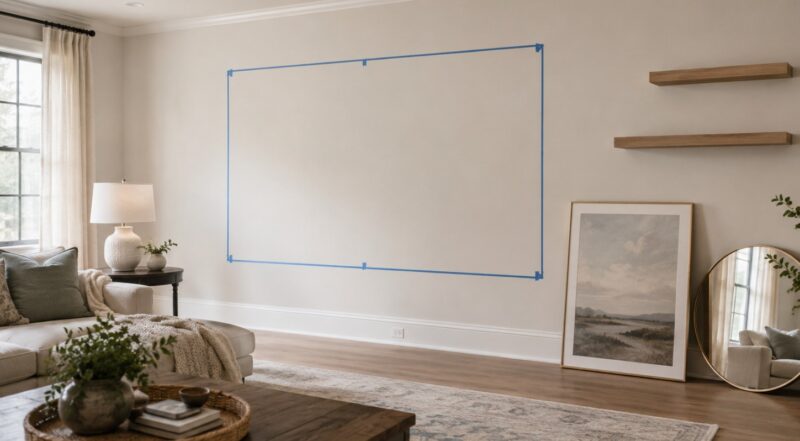
Most importantly, do not try to solve the whole living room at once. Measure the wall, choose one direction, and mock up larger pieces with painter’s tape before buying them.
One or two thoughtful changes can make the space feel finished without covering every empty section.
FAQs
1. Can you leave part of a large living room wall blank?
Yes. Empty space around artwork, mirrors, and furniture helps individual pieces stand out. You do not need to decorate from corner to corner simply because the wall is large.
2. How can I decorate a large wall without drilling?
Depending on the weight involved, consider removable hooks, adhesive strips, leaning artwork, lightweight picture ledges, or removable wallpaper. Always follow the mounting product’s weight and surface recommendations.
3. What should go on a large wall behind a TV?
Treat the TV as part of the overall composition. Low cabinetry, restrained shelving, wall panelling, or a contrasting painted section can integrate the screen without surrounding it with unnecessary decorative objects.
4. Does living room wall decor have to match the sofa?
No. Exact matching can make a room feel overly coordinated. Repeating one or two colours, materials, or shapes already present in the sofa, rug, cushions, curtains, or lighting is usually enough to create visual continuity.