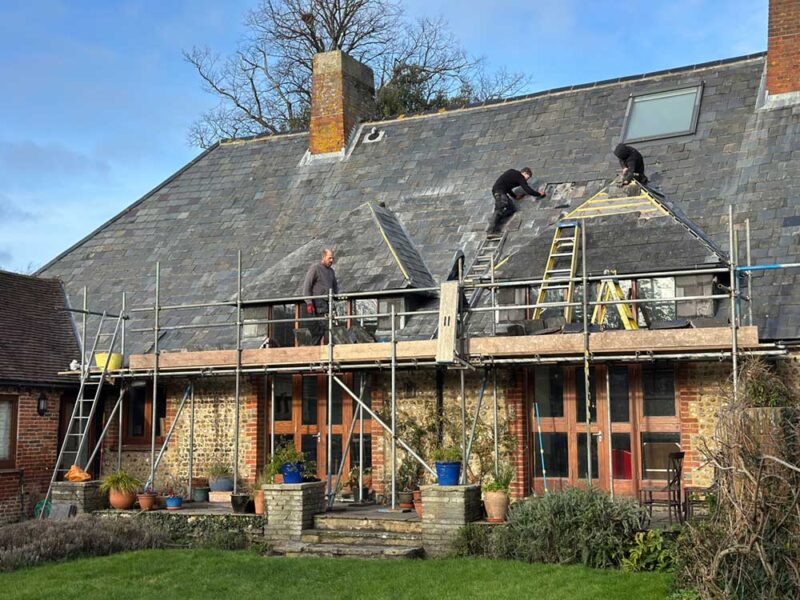
Homes around the South Downs often sit in landscapes that are beautiful, green and changeable. Those same conditions can be demanding on roofs. Shaded lanes, mature trees, damp valleys, exposed slopes and older building materials all influence how a roof weathers over time. The issues are not always dramatic. More often, they appear gradually: moss thickens, gutters slow, a valley collects debris, or a chimney flashing starts to let in a little water during heavy rain.
Roof maintenance in rural settings is therefore less about waiting for a sudden failure and more about understanding where moisture is likely to gather. When homeowners know the vulnerable points, they can deal with small problems before they damage interiors.
This is especially important for homes around Midhurst, Easebourne, Fernhurst and the surrounding South Downs villages, where properties may be shaded by trees, exposed to open countryside or built with a mixture of older and newer roof materials. A tiled cottage, a converted outbuilding and a modern extension can all sit on the same property, but each roof area may weather differently. Looking at the whole roof rather than one obvious defect gives homeowners a clearer picture of what is really happening.
Moss and shade
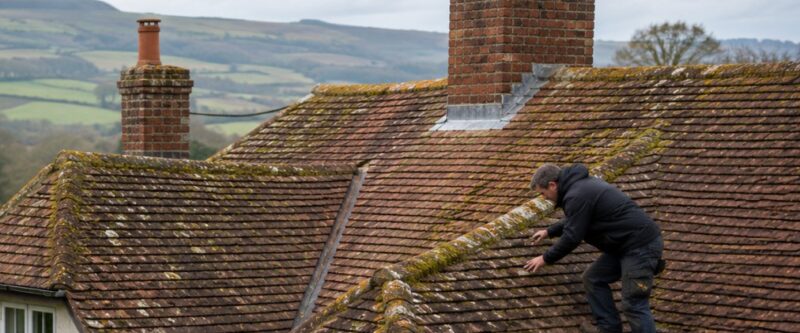
Moss is common on roofs where there is shade, moisture and limited airflow. It is often seen near trees, on north-facing slopes or in areas where morning sun takes longer to dry the roof. A light covering may be mainly cosmetic, but heavier growth can hold moisture, obscure tile condition and wash into gutters.
The danger is not that every patch of moss means the roof is failing. The concern is that moss can contribute to blocked drainage and make it harder to spot other defects. If gutters fill with moss fragments after rain, or if large clumps are slipping down the roof, it may be time for a closer look.
Homeowners should be cautious with aggressive DIY cleaning. Scraping, pressure washing or walking on fragile roof coverings can cause more harm than good. The safest first step is observation and advice.
It is also useful to think about why moss is forming in the first place. Overhanging branches, blocked gutters, poor airflow and persistent shade can all make a roof stay damp for longer after rain. If those conditions are ignored, moss may return quickly even after it is removed. Managing the surrounding conditions, where practical, is often more effective than treating the roof surface in isolation.
Valleys need to stay clear
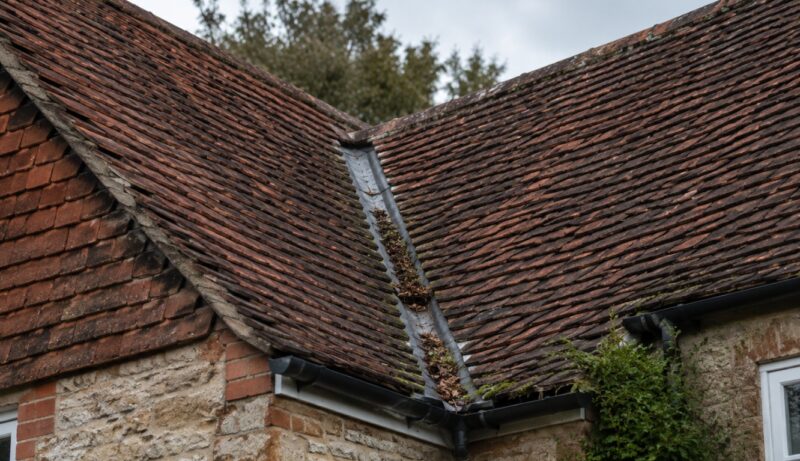
Roof valleys are designed to carry water from two slopes into the gutter system. Because they concentrate water flow, they are one of the most important parts of the roof. They are also natural collection points for leaves, moss, twigs and grit.
When a valley blocks, rainwater can slow, pool or move sideways under the roof covering. That can lead to damp patches that seem difficult to trace. In rural areas, especially near trees, valleys should be checked periodically from a safe position and cleared when needed by someone with proper access.
Valleys are particularly important on homes with extensions, dormers or more complex roof shapes. Where an older roof meets a newer addition, the valley or junction may be handling more water than homeowners expect. If leaves or moss collect there, the problem can develop gradually. A small stain on an upstairs ceiling may be the first visible sign that the water route has changed.
Downpipes should be considered at the same time. A clear valley is only useful if the gutter and downpipe below it can take the water away. During heavy rain, water should move cleanly into the drainage system rather than spilling over joints or splashing down walls.
Chimneys and flashing details
Older homes often have chimneys that add character but also create roof junctions. The masonry, leadwork and surrounding tiles all need to work together. Cracked pointing, tired lead, loose pots or failing flaunching can allow water in, especially when rain is driven by wind.
Early signs may include damp around chimney breasts, staining in loft spaces, crumbling plaster or musty smells after rain. These clues should not be dismissed as simply part of owning an older property. They usually point to a detail that needs attention.
For homeowners looking for roofers Midhurst, it is worth asking about valleys, chimneys, gutters and moss as part of one roof health check, rather than treating each issue separately.
Older chimneys also need to be considered alongside ventilation and room use. A chimney that is no longer used regularly can still be exposed to rain, frost and wind. If the flaunching around pots cracks, or if pointing begins to fail, water may enter even though the fireplace itself seems dormant. This is why unused or partly used chimneys should not be forgotten during roof maintenance.
Flat roofs and rural extensions

Many homes in villages and rural towns have extensions, garages, porches, garden rooms or outbuildings with flat or low-pitched roofs. These areas can be reliable, but they rely heavily on drainage. Leaves, moss and debris can block outlets, while minor surface damage can worsen through freeze-thaw cycles.
After heavy rain, homeowners should check whether water is draining away or remaining on the surface. Standing water does not always mean immediate failure, but repeated ponding may shorten the life of the covering.
Flat roofs can be easy to ignore because they are often hidden from the main garden or driveway. A roof over a utility room, garage or single-storey extension may only be visible from an upstairs window. That makes seasonal checks more important. Look for obvious debris, lifting edges, staining below the ceiling or signs that outlets are not clearing water as they should.
The detailing around a flat roof is just as important as the covering itself. Edges, upstands, junctions with walls and areas around rooflights can all become weak points if they are poorly maintained. In a rural setting, where leaves and moss are common, those details can deteriorate quietly.
Storms and exposed locations
The South Downs can bring exposed conditions, particularly on higher ground or open edges of settlements. After high winds, check for slipped tiles, loose ridge details, damaged gutters, fallen branches and changes around roof edges. Indoors, look for new ceiling marks or damp patches that appear after specific weather.
It is useful to keep notes. If damp appears only after wind from one direction, that information can help trace the fault more quickly.
Storm checks should also include the ground around the property. Broken tile fragments, sections of mortar, pieces of flashing or displaced gutter clips may be easier to spot on the ground than on the roof. A homeowner may not know exactly where the item came from, but the discovery is a strong reason to arrange a closer look.
Inside the house, loft spaces can offer early clues if they are safe and accessible. Damp felt, stained rafters, daylight through small gaps or musty smells after rain may indicate that water is entering before it reaches a finished ceiling. No one should move around an unsafe loft or disturb insulation unnecessarily, but a simple visual check from the hatch can sometimes be enough to notice a change.
Maintenance that fits the setting
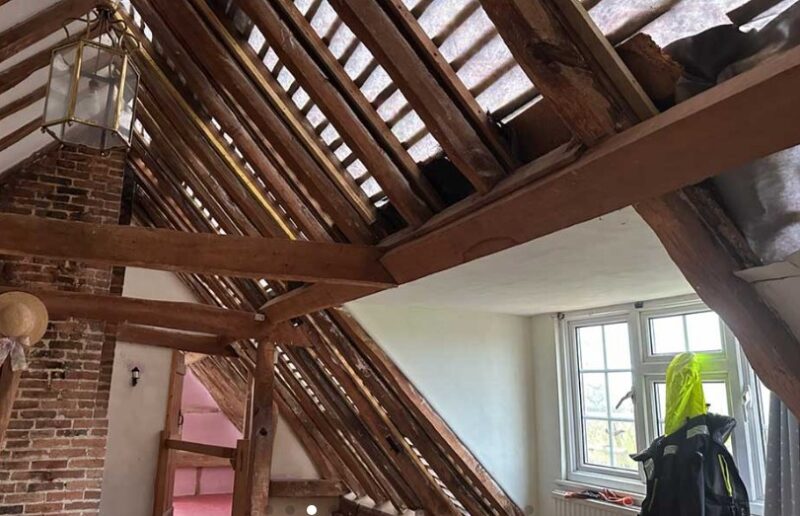
Rural roof maintenance should be steady, practical and proportionate. Not every roof needs major work, and not every sign of age is a problem. The key is to keep water moving away from the building and to maintain the details where water is most likely to enter.
By paying attention to moss, valleys, chimneys, gutters and flat roof outlets, homeowners can protect both the structure and the character of their properties. In a landscape shaped by weather and seasons, that kind of regular care is one of the simplest ways to keep a home dry and resilient.
Timing also matters. Late summer or early autumn is often a sensible moment to check the roof, because there is still time to deal with small issues before the wettest and windiest months arrive. A second look after the main leaf fall can also be useful for homes surrounded by trees.
The best maintenance plan is not complicated. It is a rhythm: observe the roof from the ground, keep drainage clear, notice internal changes, check after storms and seek advice before minor defects become disruptive. For South Downs homes, that rhythm helps preserve not only the roof but the comfort, character and value of the property beneath it.