A well-designed kitchen starts with the right combination of cabinets and countertops, as these two elements set the tone for the entire space.One of the most satisfying parts of a kitchen renovation is also one of the most nerve-wracking: choosing your materials.
You can have a beautiful cabinet style picked out and still feel completely stuck the moment someone asks what kitchen countertops you want to pair with them. It is a decision that affects the whole look of the room, and getting it wrong is an expensive lesson most homeowners would rather skip.
The good news is that matching countertops to cabinets does not require a design degree. Once you understand a few core principles, the decision becomes a lot more intuitive. This guide walks you through the most practical approaches so you can move forward with confidence.
Start With What You Already Know You Want
Before you start pulling samples, get clear on one thing: which element is driving the design? In most kitchens, one material tends to lead and the other follows. Knowing which one you are more committed to makes the pairing process much easier.
Ask yourself these questions first:
- Do you already have cabinets selected, or are you choosing both at the same time?
- Is there a countertop material you have always wanted, like quartz or butcher block?
- Are you working around existing flooring or appliances that need to coordinate?
- Do you have a general color direction in mind, such as light and airy versus dark and dramatic?
Your answers will tell you which material to anchor the design around. From there, you are choosing a complement, not a starting point.
The Basic Rule: Contrast Creates Balance
The single most reliable design principle for pairing cabinets and countertops is contrast. When one element is light, the other should be darker. When one is busy or has visible movement, the other should be quieter. This creates visual balance and keeps the kitchen from feeling flat or overwhelming.
Here is how this plays out in practice:
- White or light gray cabinets pair well with darker countertops like charcoal quartz, black granite, or a veined marble with depth.
- Dark navy or espresso cabinets look sharp with lighter countertops in white, cream, or soft gray.
- Medium-toned wood or natural finishes work beautifully with both ends of the spectrum, making them very forgiving to work with.
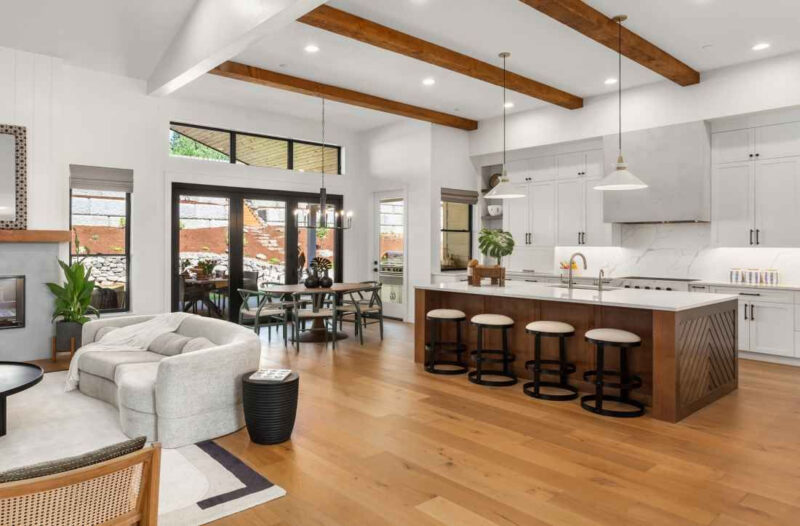
- Two-tone cabinet designs (like a dark island paired with lighter perimeter cabinets) give you more flexibility to introduce a countertop that bridges both tones.
That said, contrast does not mean dramatic. Subtle contrast works just as well. A soft white cabinet paired with a warm cream or light beige countertop still has contrast, just in a quieter, more understated way.
Matching Countertop Style to Cabinet Style
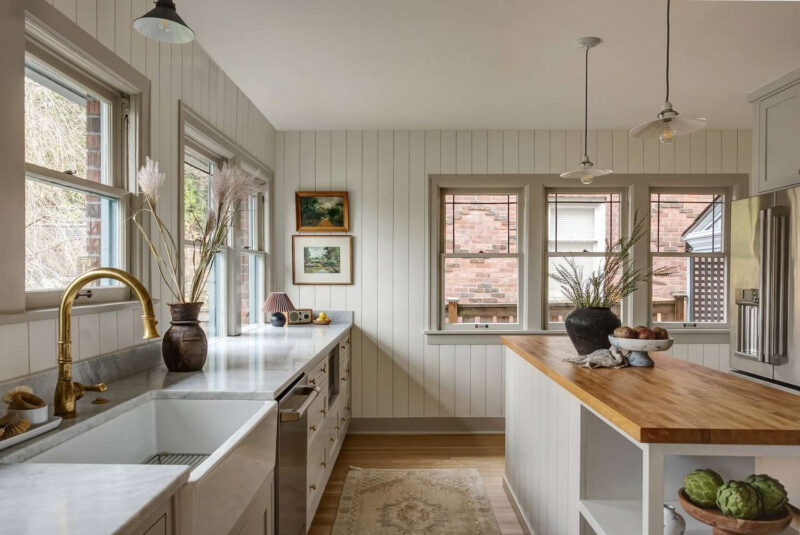
Beyond color, the style and character of your cabinets should inform the type of countertop you choose. Different cabinet styles carry different design expectations, and choosing a countertop that feels out of step with your cabinet style can make even a beautiful kitchen feel a little off.
Shaker Cabinets
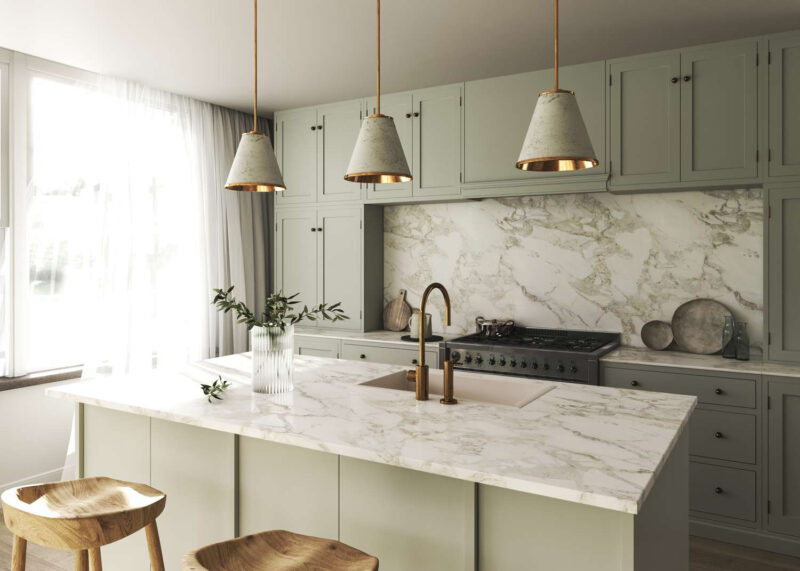
Shaker is one of the most popular cabinet styles for a reason. It is clean, classic, and works in a wide range of kitchens from farmhouse to transitional to contemporary. Because shaker cabinets are relatively simple in their design, they are forgiving partners. They work with nearly any countertop material.
Good pairings for shaker cabinets include:
- Quartz in white, gray, or soft earthy tones
- Honed granite for a more relaxed, matte look
- Butcher block for a warm, cottage feel
- Marble or marble-look quartz for a more elegant take
Shaker cabinets rarely fight with the countertop, which is part of their appeal.
Raised Panel Cabinets
Raised panel cabinets have more visual detail and a traditional feel. They tend to lean formal or classic, so the countertop should honor that character rather than work against it.
Strong pairings for raised panel cabinets:
- Granite with natural movement and depth
- Marble or quartz with soft veining
- Solid surface materials in classic colors like cream or warm white
Very sleek, ultra-minimalist countertops can feel disconnected from the ornate quality of a raised panel door. Keeping the countertop in the same traditional lane usually produces a more cohesive result.
Slab or Flat-Front Cabinets
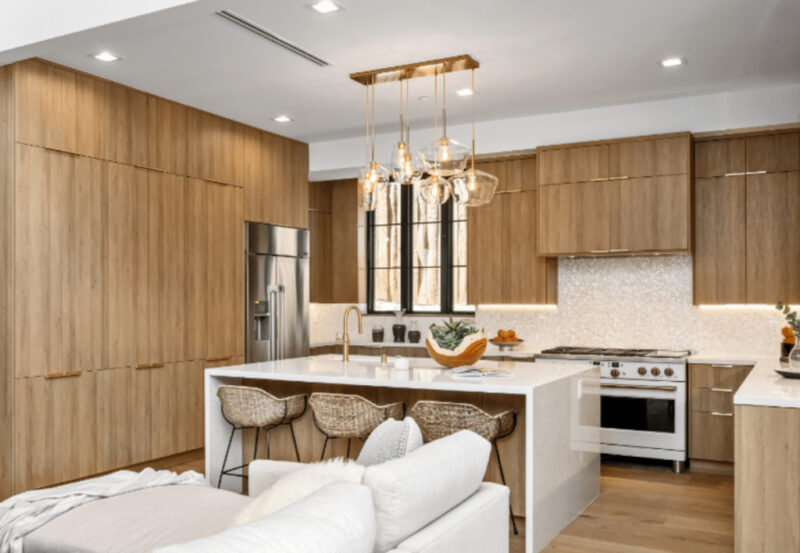
Flat-front, or slab, cabinets have no frame detail at all. They are the most contemporary option and work best in modern and minimalist kitchens. Here, the countertop often becomes the star of the show.
Countertops that shine alongside flat-front cabinets:
- High-contrast quartz in black and white combinations
- Large-format slabs with dramatic veining
- Concrete or concrete-look surfaces
- Porcelain slab countertops
With flat-front cabinets, the countertop has more room to make a statement. This is where bold choices tend to pay off.
Don’t Forget the Undertones
One of the most common pairing mistakes homeowners make is not accounting for undertones. A countertop labeled “white” can lean pink, yellow, blue, or green depending on the stone or material. Cabinets labeled “gray” can pull warm or cool. When undertones clash, the result is a kitchen that feels slightly off even if you can not immediately explain why.
Here is a quick guide to keeping undertones in harmony:
- Warm cabinets (creamy whites, honey tones, warm grays) pair best with countertops that have warm undertones like beige, ivory, or gold-veined stone.
- Cool cabinets (bright whites, blue-grays, charcoals) coordinate better with countertops that lean cool, like crisp white quartz, blue-gray granite, or soft bluish marble.
- When in doubt, go neutral. A true neutral countertop without a strong undertone gives you more flexibility and rarely creates visual conflict.
Always look at samples together in your actual kitchen, under your actual lighting. Showroom lighting can be misleading, and what looks like a perfect match in the store may look completely different at home.
Thinking About the Full Picture
Your cabinets and countertops do not exist in a vacuum. They share the room with your backsplash, flooring, hardware, and appliances. Pulling all of those elements together is part of what makes a kitchen feel finished and intentional rather than assembled from unrelated parts.
A few things to keep in mind as you finalize your selections:
- Flooring: If your floor has warm tones, lean warm with your countertop to create a cohesive flow from the ground up.
- Backsplash: Your backsplash often pulls from both the cabinet and countertop colors, so choosing it after your primary materials are selected makes the process simpler.
- Hardware: Brushed brass or warm metals tend to complement warmer cabinet and countertop combinations. Matte black and polished chrome work well in cooler, more contemporary settings.
- Appliances: Stainless steel is the most neutral appliance finish, but black stainless and matte black are increasingly popular and can influence the overall color direction.
Keeping all of these elements in mind from the start saves a lot of backtracking later.
When to Bring in a Professional
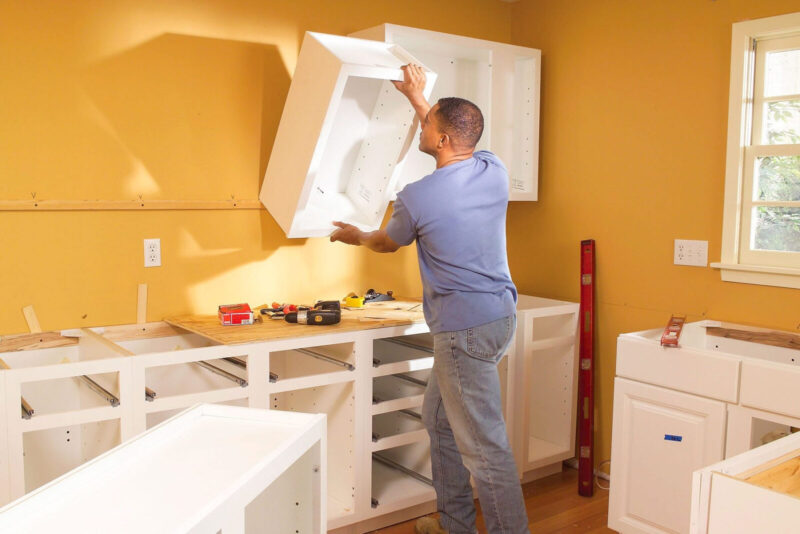
Most homeowners can narrow down their options using these principles, but there is a point where professional guidance makes a real difference. If you are working with a non-standard layout, mixing multiple finishes, or simply feeling overwhelmed by choices, working with a cabinetry and countertop professional can bring clarity faster than any amount of online browsing.
A good design professional will look at your space holistically, consider how light moves through the room at different times of day, and help you make choices that hold up over time. They have seen enough kitchens to know which pairings age well and which ones homeowners come to regret.
More importantly, they can bring actual samples into your space so you can see exactly how materials interact before anything is ordered or installed.
Final Thoughts
Matching your kitchen countertops to your cabinet style is about more than picking two things that look nice side by side. It is about understanding contrast, undertones, design character, and how all the elements in the room relate to one another.
Start with a clear anchor material. Build in intentional contrast. Make sure undertones align. Then step back and consider how the full room comes together.
When those pieces are in place, the kitchen you have been imagining starts to feel very real. And when the installation is done right, it is a space you will love every single day.